



When you get ghosted on a dating app, the best response is usually silence. No follow-up needed. If you want to close the loop, one short, confident message is enough. Most ghosting reflects the other person's conflict-avoidance or mismatched investment, not a verdict on your worth.
That said, it stings, and confusion is a completely normal reaction. This guide covers why ghosting happens, when and how to send that final message (and when not to), what mistakes to avoid, and how to build the kind of profile that makes early-stage ghosting far less common.
How to Respond to Ghosting: Key Takeaways
- Wait a full 7 days before concluding you've been ghosted. One or two days of silence often has a mundane explanation.
- The most powerful response is usually silence: sending nothing communicates self-respect more than any follow-up message.
- If you want closure, use the Confident Close-out: "I haven't heard back so I'm going to assume you've moved on. It was great chatting and I wish you the best."
- Ghosting reflects the ghoster's conflict-avoidance or circumstances, not your worth. Treat it as a filter, not a verdict.
- The best long-term defense is a strong, authentic profile that creates real connection from the first message, making early-stage ghosting far less common.
Why Do People Ghost? Understanding the Modern Dating Mindset
Before you figure out what to do, it helps to look behind the curtain. Understanding the psychology of ghosting isn't about making excuses for them; it's about robbing the act of its personal sting. When you realize it's usually not about you, it loses its power.
Reason 1: The Illusion of Infinite Choice
Dating apps have created a paradox of choice: Think of it like a slot machine that never stops paying out small wins, new matches.
For some people, the next potential connection is just a swipe away. This can reduce the perceived value of any single conversation, making it easier to drop one without a second thought. They aren't invested because they believe a "better" option is always coming.
Reason 2: Conflict Avoidance
Let's be honest. Direct communication can be uncomfortable. For many, ghosting is simply the path of least resistance.
Sending a text like, "Hey, I enjoyed chatting but I don't feel a strong connection," requires a small amount of courage and emotional maturity. Ghosting requires nothing. It's the ultimate non-confrontational exit, even if it's a cowardly one.
Reason 3: A Mismatch in Perceived Connection
This can be a tough pill to swallow, but it's a common reality in the early stages of dating. You might have felt an amazing spark, while they saw it as a casual, pleasant chat.
When the investment levels are mismatched, the person who is less invested doesn't feel a social obligation to provide a formal "goodbye." In their mind, the conversation just fizzled out, no explanation needed.
Sometimes the initial conversation just doesn't hit the right notes, and knowing how to start a conversation on tinder effectively can make all the difference in building that mutual connection from the start.
Look your best on every dating app. In 10 minutes our AI generates realistic and high-performing dating photos designed to get more likes and dates.
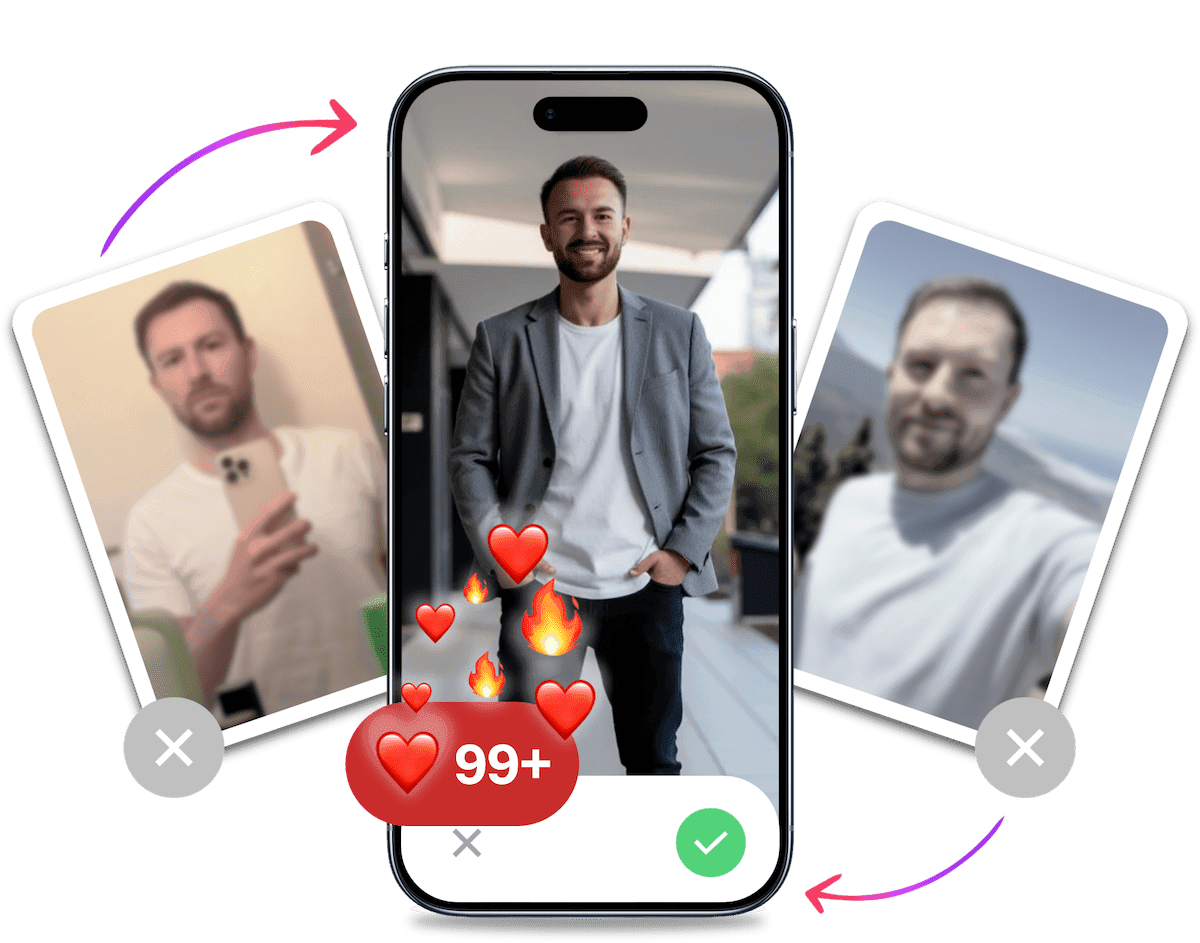
- Get a profile you're proud of
- Drastically increase your matches
- Turn great matches into more dates
Reason 4: External Factors You Can't Control
Sometimes, it genuinely has nothing to do with you. The silence on their end could be caused by countless real-life scenarios.
The truth is: ghosting often reflects the ghoster's communication skills and emotional availability, not your worth. Their silence tells you they aren't the right person for you.
Research backs this up: in a study of 626 adults aged 18–40, those who experienced ghosting reported significantly higher levels of loneliness and helplessness than those who hadn't. What you're feeling is a documented psychological response, not oversensitivity.
Here are just a few possibilities:
- They got back together with an ex.
- A major work project blew up their schedule.
- They decided to take a break from dating apps altogether.
- A family emergency required their full attention.
You will likely never know the real reason. Dwelling on these possibilities is a waste of your mental energy. The key takeaway is simple: their decision to ghost is a reflection of their circumstances or character, not a verdict on your value.
What to Do When You've Been Ghosted: A Tactical Guide
Okay, you've been left on read. The initial sting is fading, and now it's time for a plan. How you react says everything about your confidence and self-respect. Here's your step-by-step playbook for handling ghosting on dating apps like a high-value man.
Step 1: Confirm the Ghosting (The 7-Day Rule)
First, don't jump to conclusions. Life happens. People get busy, forget to reply, or miss notifications. Firing off an accusatory message after 24 hours of silence makes you look insecure and impatient.
Give it a full 7 days.
This is a reasonable timeframe. If a week has passed since your last message with zero response, you can safely assume it's a ghosting situation. Anything less, and you risk overreacting to a simple delay.
Step 2: The Final Message: When and How to Send It
If you've decided to send one last message, the tone is everything. You must avoid coming across as angry, needy, or passive-aggressive. Your goal is either to get a response or to close the loop for your own peace of mind, not to beg for attention.
Knowing when to double text is a fine art, and in this case, it's about closure, not chasing.
Here are three copy-and-paste templates for different scenarios:
- The Casual Check-in (Low Investment) Use this if you only exchanged a few messages and the conversation was light. It's low-pressure and gives them an easy way to re-engage.
"Hey, just wanted to check in and see if you were still interested in grabbing that drink. Let me know!"
- The Confident Close-out (Higher Investment) This is your best bet if you had a great conversation or even made tentative plans. It shows confidence, communicates that you're moving on, and respects your own time. It's not about getting a reply; it's about closing the door on your terms.
"Hey, I haven't heard back so I'm going to assume you've moved on. It was great chatting with you and I wish you the best."
- The Humorous Nudge (Use With Extreme Caution) This is a high-risk, high-reward option. It can only work if your previous conversations were full of playful banter and you have a good read on their personality. If it lands wrong, it can seem weird or passive-aggressive.
"Are you okay? Just checking to see if you were abducted by aliens. If so, blink twice."
Step 3: The Art of Doing Nothing: Why Silence is Often Your Best Move
What's the most powerful response to being ghosted? Often, it's nothing at all.
Sending no follow-up message communicates everything you need to. It says, "I respect myself," "My time is valuable," and "My happiness isn't dependent on your reply." Silence is a statement of abundance. You have other options and other things going on in your life.
Double-texting or demanding an explanation only digs a deeper hole and confirms their decision to disengage. Your silence retains your dignity completely.
What NOT to Do: The 3 Cardinal Sins of Being Ghosted
Your reaction is critical. Avoid these common mistakes that destroy your self-respect and give away all your power.
- Don't send an angry rant. Firing off a novel about how rude and disrespectful they are only makes you look bitter and emotionally reactive. You won't teach them a lesson. You'll just give them a story to laugh about with their friends.
- Don't beg for an explanation. Messages like "Why aren't you answering?" or "Did I do something wrong?" reek of desperation. It places them on a pedestal and communicates low self-worth. You don't need their validation to know your value.
- Don't stalk their social media. Do not check their Instagram stories, their Facebook activity, or their Snapchat score. It's a form of self-torture that only prolongs the pain and keeps you mentally stuck on someone who has already moved on. Delete the chat. Unmatch. Remove the temptation.
It's Probably Your Photos.

Average users see 8x more right swipes with our AI photos. Stop wasting time on dating apps and join 60,000+ singles who have already found better dates with TinderProfile.ai.
How to Mentally Recover and Move on with Strength
Ghosting can feel like a personal rejection, but dwelling on it is a choice. The faster you can reframe the situation and refocus your energy, the more resilient you'll become. Here's how to bounce back even stronger.
Reframe the Narrative: It's Data, Not a Rejection
Stop seeing ghosting as a failure. Start seeing it as a filter.
When someone ghosts you, they are giving you a valuable piece of data: they are either not interested enough, not emotionally mature enough, or not courageous enough for a real relationship. They are showing you their poor communication skills upfront. This isn't a rejection. It's a disqualification.
Psychology Today is direct on this: don't reach out again after being ghosted. Ghosting tells you everything about their communication habits and nothing about your value.
They filtered themselves out for you.
Consider it a dodged bullet. You just learned valuable information about their character without wasting weeks or months of your time. These are serious online dating red flags that you were lucky enough to see early.
Re-invest in Yourself
The absolute best antidote to the sting of ghosting is action. Sitting around and ruminating only makes it worse. You need to get out of your head and back into your life.
What does this look like? It's simple.
- Hit the gym. Physical exertion is a powerful mood booster and confidence builder.
- Focus on a project. Pour that extra mental energy into your work, a hobby, or a personal goal. Progress is a powerful feeling.
- Connect with your friends. Spend time with people who value and respect you. It's a quick reminder of your worth.
Get Back on the Horse (Strategically)
Don't let one bad experience lead to dating burnout or convince you to quit the apps entirely. A short break can be healthy, but the goal is to re-engage with a renewed sense of purpose and a stronger strategy.
Use this as a chance to cut the Tinder mistakes that drive early ghosting in the first place. Is your profile as strong as it can be? Are your photos compelling? A great profile doesn't just attract matches. It attracts higher-quality matches who are more likely to be good communicators.
Take this time to learn how to make a good tinder profile that truly represents you and makes you impossible to ignore.
A Stronger Offense is the Best Defense: Minimizing Your Chances of Being Ghosted
While you can't control someone else's behavior, you can significantly improve the quality of your first impression to make ghosting far less likely. Why does early-stage ghosting happen? Often, it's because a weak or unengaging profile failed to create a strong initial spark.
You become just another face in a sea of forgettable profiles.
Your photos are the first and most critical part of that impression. Generic selfies, blurry group shots, or photos from five years ago make you instantly dismissible. Correcting the most common dating profile mistakes starts with your photos. To stand out, you need Good Tinder Pictures that project confidence, authenticity, and intrigue.
The Unfair Advantage Your Competition is Using
This is where AI can give you a massive, unfair advantage. Instead of spending hundreds on an awkward photoshoot, TinderProfile.ai uses your existing photos to generate up to 100 high-quality, authentic-looking images that are proven to work on dating apps. It's the simplest way to build a profile that commands attention and makes them want to reply.
On average, customers report 3x–8x more matches and 7.9x more opening messages after switching to AI-generated dating photos. Those are the kind of numbers that turn being ghosted from a regular frustration into a rare exception.
We're not talking about fake-looking avatars or stuffy corporate headshots. Our AI is built exclusively for dating. It creates realistic AI dating photos that look like they were taken by a friend on your best day. It's you, but optimized for attraction.
Stop letting bad photos lead to ghosting. See what our AI can do for you and start getting the matches you deserve.
Conclusion: Take Back Your Power
Dealing with ghosting ultimately comes down to mindset and self-respect. You can't stop everyone from doing it, but you can control your reaction and refuse to let it affect your confidence.
Remember the playbook. Understand it's not personal, act with dignity, recover by investing in yourself, and build a profile so compelling that ghosting becomes a rarity. You're in control of your dating life. Act like it.
Frequently Asked Questions on How to Respond to Ghosting
What's the best text to send after being ghosted?
In most cases, the best text is no text at all. Silence communicates self-respect. If you feel compelled to send one final message for closure, use the Confident Close-out: "Hey, I haven't heard back so I'm going to assume you've moved on. It was great chatting with you and I wish you the best." It's polite, confident, and closes the loop on your terms.
How long should I wait before considering it ghosting?
Wait a full 7 days before officially considering yourself ghosted. Life gets busy, and people can genuinely forget to reply for a few days. After a week of silence with no response, it's safe to assume they've disengaged intentionally. Anything less, and you risk overreacting to a simple delay.
Is it ever okay to call someone out for ghosting?
While it might feel satisfying in the moment, calling someone out rarely accomplishes anything positive. Sending an angry or accusatory message makes you look bitter and emotionally reactive, often validating their decision to ghost you. The most powerful move is to simply move on without giving them any more of your energy.
Why does being ghosted hurt so much?
Being ghosted taps into fundamental fears of rejection and social exclusion. The lack of closure is particularly difficult: unanswered questions trigger self-doubt and keep you stuck in rumination. Research on dating app rejection and ghosting confirms that ghosting commonly causes anger, anxiety, and distress, with the ambiguity making it harder to process than a direct "no."
Does being ghosted mean they were never interested?
Not necessarily. Some people ghost due to anxiety, sudden life disruptions, or a habitual pattern of conflict-avoidance rather than definitive disinterest. What matters is that ghosting signals poor communication skills regardless of the cause. That tells you something important about whether this person is equipped for a real relationship. It's information worth having early.