



A pause after a few dating-app messages doesn't prove ghosting. If a regular pattern of contact changes, send one low-pressure follow-up only if contact is welcome and you haven't already sent one. Respect any boundary or block. For an unconfirmed plan, set a practical deadline to confirm it, then make other arrangements if you hear nothing.
The feeling is a potent mix of frustration, confusion, and even a hit to your self-worth. It sucks. But you're not alone, and your reaction is completely valid.
This guide will break down why ghosting happens, give you a practical playbook for how to respond (and when not to), and show you how to build resilience so it never derails your dating life again.
How to Respond to Ghosting: Key Takeaways
- A pause after a few app messages isn't proof of ghosting. If regular contact changes, send at most one low-pressure follow-up if contact is welcome and you haven't sent one already. Set a practical deadline for an unconfirmed plan, then make other arrangements.
- If you send a final message, use the Confident Close-out: "I haven't heard back so I'll assume you've moved on. It was great chatting with you."
- Silence is often the strongest response. Sending nothing communicates self-respect and abundance better than any follow-up text.
- Silence tells you that contact stopped, but it doesn't tell you why or say anything about your worth.
- A refreshed profile can help you represent yourself when you return to dating apps, but it can't control whether someone replies.
Why Do People Ghost? Understanding the Modern Dating Mindset
Silence gives you little evidence about another person's reason. Surveys can describe patterns that dating-app users report, but they cannot tell you why one person stopped replying.
Reason 1: The Illusion of Infinite Choice
Dating apps put new profiles within easy reach. One possibility is that someone treats a conversation as one of many, but a pause cannot tell you whether that happened here.
Reason 2: Conflict Avoidance
A direct rejection can feel uncomfortable, so one possible explanation is that someone avoids sending it. That may happen, but you cannot tell from silence whether conflict avoidance was the reason.
Reason 3: A Mismatch in Perceived Connection
You may have felt a strong connection while the other person saw the chat as casual, or the conversation may simply have faded for both of you. You can't know how they saw it from a gap in replies.
If you're starting a new chat, these tips on how to start a conversation on Tinder can help you get it going.
Look your best on every dating app. In 10 minutes our AI creates realistic dating photos designed to get you more likes, better matches and better dates.
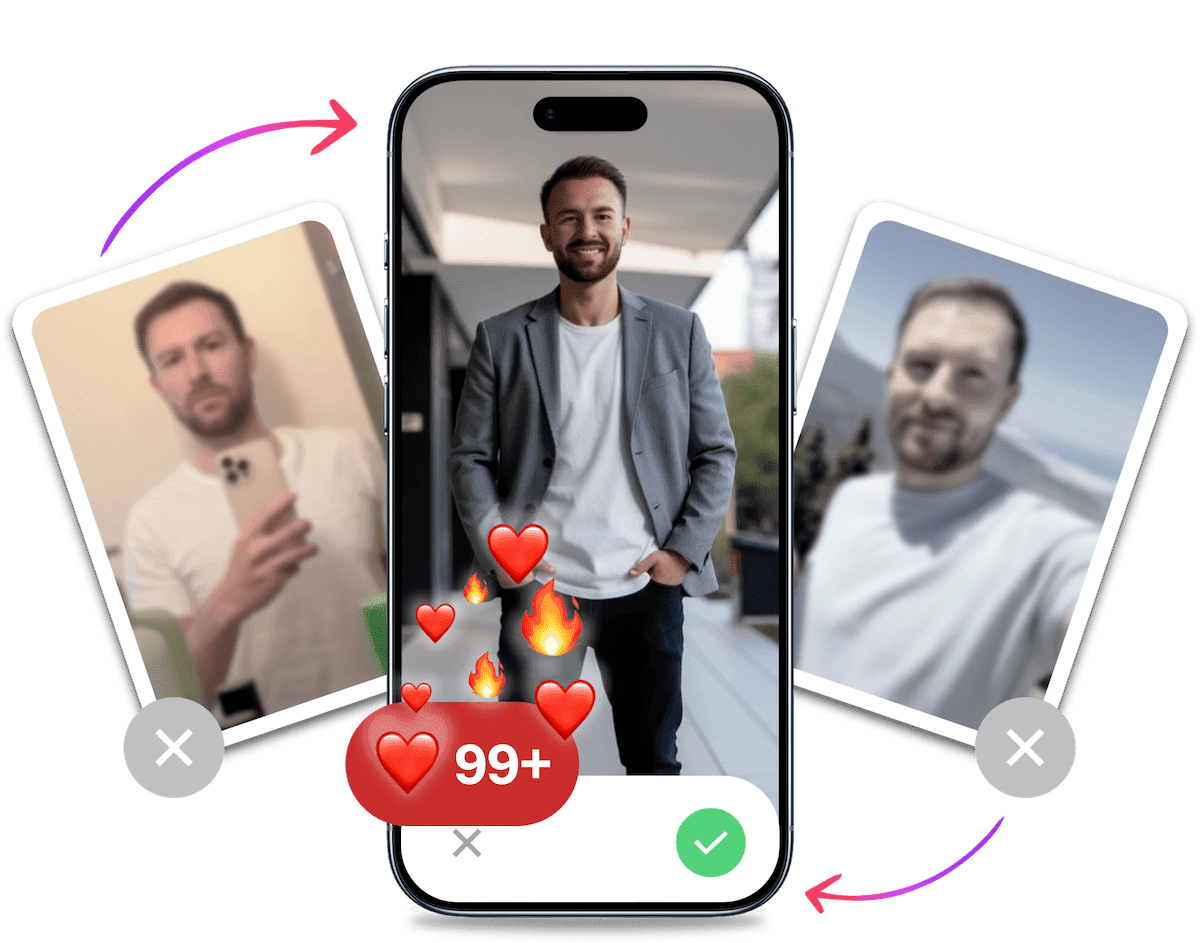
- Get a profile you're proud of
- Proven to increase matches on dating apps
- Turn great matches into more dates
Reason 4: External Factors You Can't Control
Silence can coincide with events in someone's life or a change in their dating-app use, but those are possibilities rather than answers. In Timmermans et al.'s survey of mobile daters, 328 Dutch-speaking dating-app users described varied reasons for cutting contact. Their reports cannot identify the motive behind one person's silence.
Possible explanations can include:
- They got back together with an ex.
- A major work project blew up their schedule.
- They decided to take a break from dating apps altogether.
- A family emergency required their full attention.
You may never learn what happened. A list of possibilities won't tell you which, if any, applies. Make your decision based on the contact you have, rather than a guess about their motive.
What to Do When You've Been Ghosted: A Tactical Guide
Okay, you've been left on read. The initial sting is fading, and now it's time for a plan. Here's a practical playbook for handling silence on dating apps.
Step 1: Read the Situation, Not the Clock
A pause after a few dating-app messages may mean the conversation has faded. If you're restarting a new chat, see how to respond to a simple Hey opener. A break in an established pattern is different: send one low-pressure follow-up only if contact is welcome and you haven't already followed up. Respect any boundary or block. For an unconfirmed plan, set a practical deadline, then make other arrangements if you hear nothing.
Step 2: The Final Message: When and How to Send It
If contact is still welcome and you haven't already followed up, you can send one low-pressure message. Keep it brief and leave them room not to reply. Sending nothing is fine too. If you want a final note, use the close-out below. Don't send a second message if they don't respond.
Knowing when to double text can help you decide whether to send anything at all.
Here are two short options:
- The Casual Check-in (Low Investment) Use this if you only exchanged a few messages and the conversation was light. It's low-pressure and gives them an easy way to re-engage.
"Hey, just wanted to check in and see if you were still interested in grabbing that drink. Let me know!"
- The Confident Close-out (Higher Investment) This is your best bet if you had a great conversation or even made tentative plans. It shows confidence, communicates that you're moving on, and respects your own time. It's not about getting a reply. It's about closing the door on your terms.
"Hey, I haven't heard back so I'm going to assume you've moved on. It was great chatting with you and I wish you the best."
Step 3: Choose Whether to Leave It There
You don't have to send a final message. If you choose not to, let the conversation end and turn your attention elsewhere. No reply is required from either person.
If you have already followed up, leave it there. Repeated messages or demands for an explanation are unlikely to give you useful information.
What NOT to Do: Three Common Mistakes
Keep the boundary simple. You can stop contact without making a scene.
- Don't send repeated messages after you've already followed up.
- Don't send angry accusations or demand an explanation.
- Don't monitor their social accounts to look for clues.
How to Mentally Recover and Move on with Strength
Ghosting can feel like a personal rejection, but dwelling on it is a choice. The faster you can reframe the situation and refocus your energy, the more resilient you'll become. Here's how to bounce back even stronger.
It's Probably Your Photos.


Photos designed to get you more likes, better matches and better dates. TinderProfile.ai is trusted by 60,000+ users.
Reframe the Narrative: It's Data, Not a Rejection
Silence tells you that contact has stopped, but not why. It doesn't reveal the other person's character, and it isn't a verdict on your worth. Participants in dating-app research have described varied reasons for cutting contact and confusion when they received silence, which is a reminder that a gap rarely comes with a clear explanation.
You can feel disappointed and still decide what to do next. If you want to think through a connection, focus on specific behaviour you observed rather than guessing at someone's motive.
Re-invest in Yourself
The absolute best antidote to the sting of ghosting is action. Sitting around and ruminating only makes it worse. You need to get out of your head and back into your life.
What does this look like? It's simple.
- Hit the gym. Physical exertion is a powerful mood booster and confidence builder.
- Focus on a project. Pour that extra mental energy into your work, a hobby, or a personal goal. Progress is a powerful feeling.
- Connect with your friends. Spend time with people who value and respect you. It's a quick reminder of your worth.
Get Back on the Horse (Strategically)
Don't let one bad experience lead to dating burnout or convince you to quit the apps entirely. A short break can be healthy, but the goal is to re-engage with a renewed sense of purpose and a stronger strategy.
Use this as an opportunity to audit your own approach. Is your profile as strong as it can be? Are your photos compelling? A strong profile can help you show who you are. It can't tell you how someone will communicate.
If you're ready to return to the apps, update your profile so it reflects who you are now. This guide on how to make a good Tinder profile can help you decide what to change. A profile can't control who replies.
Prepare Your Profile Before Returning to Dating Apps
If you're ready to use dating apps again, take a moment to update your profile so it reflects who you are now. Good photos and a clear bio can help someone get a sense of you, but they can't control whether that person replies.
You become just another face in a sea of forgettable profiles.
Your photos are the first and most critical part of that impression. Generic selfies, blurry group shots, or photos from five years ago make you instantly dismissible. To stand out, you need Good Tinder Pictures that project confidence, authenticity, and intrigue.
The Unfair Advantage Your Competition is Using
If you'd like fresh photos before returning to the apps, TinderProfile.ai is one option. It uses your existing photos to create dating-profile images. They can help you show yourself in a different setting, but they can't prevent ghosting or guarantee a reply.
For more context, read about AI dating photos and decide whether they fit what you want your profile to show.
Thinking about updating your photos? See whether TinderProfile.ai is a useful fit for your next dating profile.
Conclusion: Take Back Your Power
Dealing with ghosting ultimately comes down to mindset and self-respect. You can't stop everyone from doing it, but you can control your reaction and refuse to let it affect your confidence.
Remember the playbook. Respond calmly, respect boundaries and give yourself time to recover. A profile can help you show who you are, but it can't control whether someone replies.
Frequently Asked Questions on How to Handle Ghosting
What's the best text to send after being ghosted?
In most cases, the best text is no text at all. Silence communicates self-respect. If you feel compelled to send one final message for closure, use "The Confident Close-out": "Hey, I haven't heard back so I'm going to assume you've moved on. It was great chatting with you and I wish you the best." It's polite, confident, and closes the loop.
How long should I wait before considering it ghosting?
A pause after a few dating-app messages isn't proof of ghosting. If someone you were regularly in touch with stops replying, you can send one low-pressure follow-up if contact is welcome and you haven't already sent one. Respect any boundary or block. For an unconfirmed plan, set a practical confirmation deadline, then make other arrangements if you hear nothing.
Is it ever okay to call someone out for ghosting?
While it might feel satisfying in the moment, it rarely accomplishes anything positive. Sending an angry or accusatory message makes you look bitter and emotionally reactive, often validating their decision to ghost you. The most powerful move is to simply move on without giving them any more of your energy.
Why can being ghosted hurt so much?
Ghosting can leave you confused because you don't know why contact stopped. Pancani et al.'s analysis of recalled experiences from 208 young adults reported confusion, anger and sadness. Those findings describe reported experiences, not a diagnosis or a timetable for recovery. It's understandable to feel unsettled, but silence doesn't tell you what the other person thinks of you.