


Hinge uses a machine-learning recommendation system that learns from profile information and in-app behavior. A match happens when two members like each other, while private We Met feedback can improve future recommendations, including after negative feedback. Hinge has not published a complete Elo score, tier system, or exact ranking weights.
That distinction matters: you can control the information and interactions you give Hinge, but you cannot tune a documented score. The guide below separates what Hinge confirms from theories and turns that evidence into practical profile decisions.
Introduction: Understanding the Hinge Algorithm
Hinge's official matching explanation says that a like or comment expresses interest and that a match occurs when two members like each other. Hinge does not publish the full list of signals or weights used to rank recommendations.
But here's the thing: knowing how the Hinge algorithm works isn't just about satisfying your curiosity. It's about maximizing your chances of finding a meaningful connection. By understanding the inner workings of this digital cupid, you can tailor your profile and interactions to increase your visibility to the right people.
In the realm of online dating, knowledge is power. Understanding the Hinge algorithm is like having a secret weapon in your quest for love.
So, buckle up as we embark on this journey through the intricate world of the Hinge algorithm. We'll explore its scientific foundations, unravel its key components, and provide you with actionable tips to make the algorithm work in your favor.
Whether you're looking for a long-term relationship or just want to expand your dating horizons, this guide will equip you with the insights you need to navigate Hinge like a pro.
Key Hinge Algorithm Takeaways
- Hinge matches two members after they like each other, and comments are another way to express interest.
- Hinge says private We Met feedback can improve future recommendations, including when the feedback is negative.
- Hinge does not publicly document an Elo or attractiveness-tier formula, exact ranking weights, or guaranteed boost rules.
- The most controllable levers are accurate profile information, specific prompts, clear photos, and thoughtful interactions.
What Hinge Publicly Confirms About Its Matching Algorithm
| Topic | What the source confirms | What not to claim |
|---|---|---|
| Likes and matches | Hinge says likes or comments express interest, and a match happens when two members like each other. | A hidden score that guarantees who will see you. |
| We Met feedback | Private feedback asks whether you met and want to see the person again, and can improve recommendations, including after negative feedback. | A fixed percentage lift or a public desirability adjustment. |
| Roses | Hinge's official Roses rules say Roses appear at the top of Likes You. One free Rose is available weekly. | Calling a Rose a documented ranking boost. |
| Core Discovery Algorithm | Match Group's 2025 Q2 report says Hinge's AI-powered Core Discovery Algorithm drove a 15% increase in matches and contact exchanges after launch. | Treating that company-wide result as a guarantee for one profile. |
| Public scoring details | An academic review describes multi-signal personalization but finds no public Elo or tier formula, exact weights, or ranking equation. | Presenting Gale-Shapley, Elo tiers, or peak-time and new-user rules as confirmed implementation. |
Look your best on every dating app. In 10 minutes our AI generates realistic and high-performing dating photos designed to get more likes and dates.
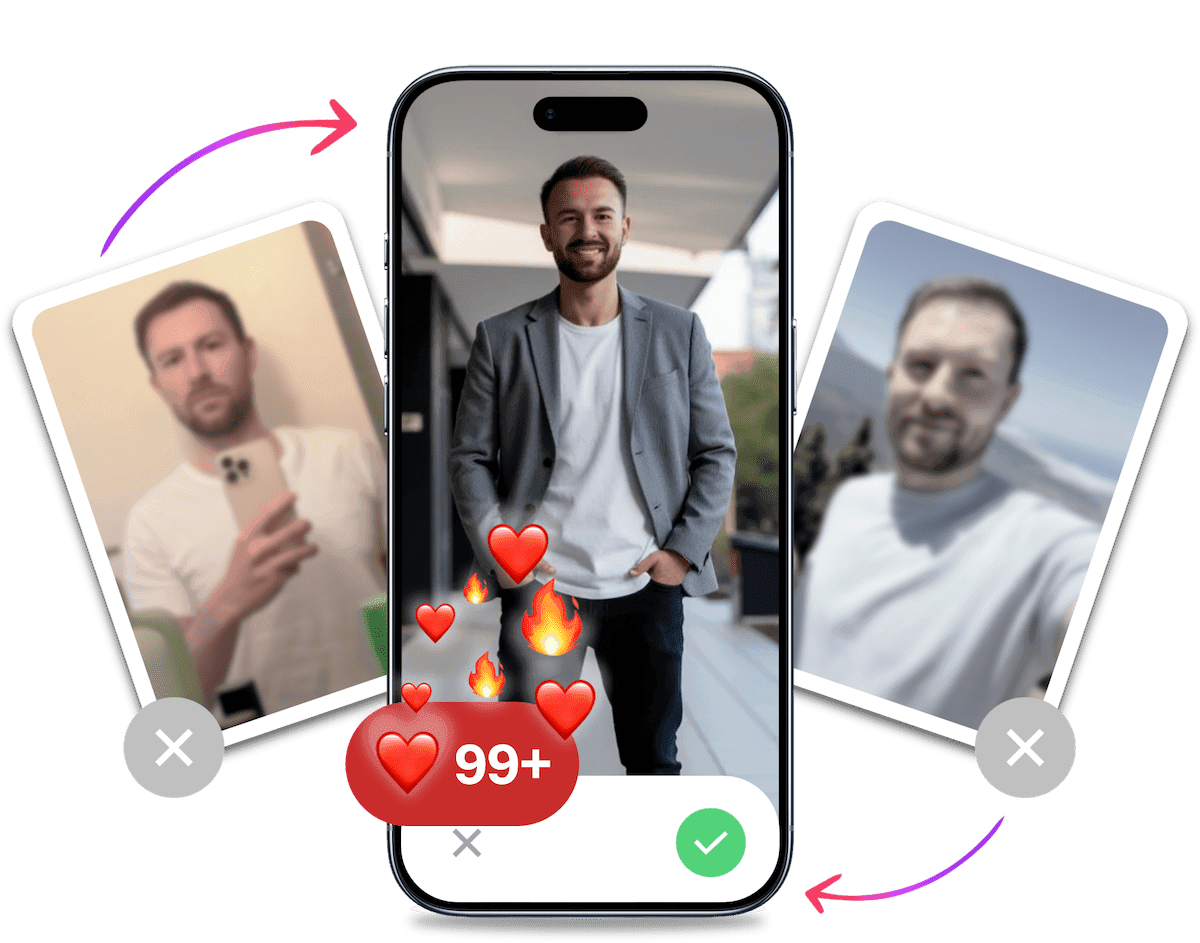
- Get a profile you're proud of
- Drastically increase your matches
- Turn great matches into more dates
Bottom line: Hinge publicly describes a recommendation system built around profile information, behavior, mutual interest, and private feedback. That is enough to guide better profile choices, but not to reverse-engineer a hidden score. Treat Elo tiers, Gale-Shapley implementation, peak-time boosts, and new-user guarantees as unverified unless Hinge publishes them.
How Does the Hinge Algorithm Work?
Now that we've got the scientific foundation down, let's roll up our sleeves and dig into the nitty-gritty of how the Hinge algorithm actually works. Think of it as a master chef, carefully blending various ingredients to create the perfect recipe for love. So, what goes into this digital love potion?
The Secret Sauce: Key Factors Influencing Matches
- Likes and Dislikes: Every time you like or pass on a profile, you're giving the algorithm valuable information. It's like telling the chef, "More spice, please!" or "Hold the cilantro." The algorithm takes note and adjusts your future matches accordingly.
- Prompts and Responses: Those witty answers to prompts? They're not just there to showcase your sparkling personality. The algorithm analyzes these to understand your interests and values. It's like a first date conversation, but with the algorithm as your attentive listener.
- Dealbreakers: When you set dealbreakers, you're essentially telling the algorithm, "No matter how great they are, if they smoke, it's a no from me." The algorithm respects these boundaries, filtering out incompatible matches.
- User Interaction Data: The way you interact with the app speaks volumes. Do you tend to like profiles with lots of travel photos? Are you more likely to send a message to someone who mentions their love for dogs? The algorithm is taking notes, always learning and refining its understanding of your preferences.
Tip: While dealbreakers are important, being too strict can limit your options. Strike a balance between your non-negotiables and keeping an open mind.
The "We Met" Feature: Hinge's Secret Weapon
One of Hinge's unique features is the "We Met" option. After you exchange numbers with a match, Hinge follows up to ask if you met in person and whether you'd like to see them again. This feedback loop is pure gold for the algorithm.
- If you indicate a positive experience, the algorithm learns more about what types of people you click with in real life.
- Negative feedback helps the algorithm avoid similar mismatches in the future.
It's like having a friend who listens to your post-date debriefs and uses that info to set you up better next time. Except this friend has a photographic memory and can process millions of data points in seconds!
Hinge says private We Met feedback helps improve recommendations, but it does not publish a percentage lift for successful dates. Treat claims such as a 30% increase as unverified.
By understanding these factors, you can start to see how every action you take on Hinge is shaping your future matches. It's a dynamic, ever-evolving process, constantly learning and adapting to help you find your perfect match.
Hinge Algorithm Updates: What Hinge Has Confirmed
Hinge does not publish patch notes or full ranking weights, so no reliable public source can confirm a specific 2026 change. Match Group's 2025 Q2 report says Hinge introduced an AI-powered Core Discovery Algorithm that drove a 15% increase in matches and contact exchanges after launch. That is a documented product update, not proof of a hidden Elo score or a guaranteed boost for any individual profile.
Use that update as context rather than a promise. Hinge is investing in machine-learning discovery, but the company has not published the model's inputs or ranking weights. If you want an edge, focus on accurate profile information, clear photos, specific prompts, and thoughtful interactions, which are all within your control.
Hinge's "Most Compatible" Feature Explained
Ah, the elusive "Most Compatible" match. It's like finding the golden ticket in your chocolate bar, but instead of a tour of Willy Wonka's factory, you get a shot at true love. But how does Hinge determine who's worthy of this coveted title? Let's pull back the curtain and take a peek.
The Magic Behind "Most Compatible"
The "Most Compatible" feature is where the Hinge algorithm really flexes its muscles. It's about identifying the person you're most likely to hit it off with and who's most likely to be into you too.
Hinge does not publish the full signals or score behind Most Compatible. Its help center says it tries to send one recommendation per day and that each suggestion expires after 24 hours. Use the feature as one recommendation rather than a guarantee of compatibility or mutual interest.
The 'Most Compatible' feature is like having a friend who knows you better than you know yourself, setting you up with someone new every day.
Boosting Your Chances of Being "Most Compatible"
Want to increase your odds of appearing as someone's Most Compatible match? Here are some tips:
- Be Active: The more you use the app, the more data the algorithm has to work with. Regular, thoughtful activity can boost your visibility.
- Be Genuine: Don't try to game the system by liking everyone. The algorithm values quality interactions over quantity.
- Update Your Profile: Keep your profile fresh with new photos and prompt answers. This gives the algorithm new data to work with and can help you appear in more searches.
- Engage Meaningfully: When you match with someone, engage in genuine conversation. The algorithm takes note of successful interactions.
- Use a Drafting Aid Carefully: A profile-writing tool can help you brainstorm, but rewrite its suggestions so your prompts sound like you.
Hinge does not publish a verified percentage for Most Compatible date outcomes, so claims of an 8x lift are unverified.
By understanding how the "Most Compatible" feature works, you can align your app behavior with the algorithm's goals. Remember, the aim isn't just to get more matches, but to find meaningful connections that could lead to great dates and potentially lasting relationships.
Proven Strategies to Beat the Hinge Algorithm
Understanding the system is one thing. Applying the parts you can control is another. Here are practical Hinge algorithm tips for improving your profile and interactions.
Prepare Your Profile Before You Rejoin Hinge
Hinge does not document a guaranteed new-user boost or a 72-hour scoring window. Prepare your photos and prompts before creating or updating a profile, then use the app normally and review which interactions feel useful.
- Don't Rush It: Have your clearest photos and thoughtful prompts ready before you sign up.
- Use the App Normally: Log in when you can give matches your attention instead of chasing a supposed boost window.
- Review Your Profile: Check that your information is accurate and your prompts reflect what you actually want.
The Strategic Liking Method: Quality Over Quantity
Hinge does not publish evidence that indiscriminate likes lower a hidden score. Be selective because it saves your time and keeps your conversations relevant, not because a documented tier system rewards a particular like-to-match ratio.
Master Your Engagement to Teach the Algorithm
Hinge does not publish evidence that comments carry more ranking weight than likes or that conversations raise a hidden standing score. Add a comment when you have something specific to say. It shows you've read the profile and gives the other person an easy opening. Once you match, respond promptly to keep the conversation moving.
Timing Your Activity for Maximum Visibility
Hinge does not publish a verified peak-time ranking schedule, so there is no reliable basis for claiming that 7 PM to 10 PM or Sundays increase visibility. Use the app when you can respond thoughtfully and keep a conversation moving.

The Standouts and Rose Strategy: A Double-Edged Sword
Your Hinge Standouts feed is a collection of profiles selected for that feature.
According to Hinge's official Roses rules, a Rose is an upgraded like, and the recipient sees it at the top of Likes You.
Hinge does not describe that placement as a ranking boost, so use your weekly free Rose or paid Roses only when you genuinely want to start a conversation.
For a practical explanation of what a Rose on Hinge does, see our separate guide.
Optimizing Your Profile for the Hinge Algorithm
Now that we've peeked behind the curtain of Hinge's algorithm, it's time to put that knowledge into action. Think of your Hinge profile as your personal marketing campaign, with the algorithm as your target audience. Let's explore how to make your profile irresistible to both potential matches and the all-important algorithm.
Profile Completion: The Foundation of Success
First things first: a complete profile is non-negotiable. The Hinge algorithm loves profiles that are fully fleshed out. Why? Because more information means better matches. Here's your profile completion checklist:
- Photos: Upload all 6 allowed photos. Variety is key!
- Prompts: Answer all 3 prompts thoughtfully.
- Basic Info: Fill out every field, from work to education to vital stats.
Your Hinge profile is like a garden. The more you tend to it, the more it flourishes - and the more likely it is to attract bees (or in this case, potential dates)!
Crafting Magnetic Prompts
Prompts are your secret weapon on Hinge. They're not just conversation starters. They're algorithm fuel. Here's how to make them work for you:
- Be Specific: Instead of "I love travel," try "Ask me about the time I got lost in Tokyo and ended up at a robot restaurant!"
- Show, Don't Tell: Rather than saying you're funny, share a hilarious anecdote.
- Update Regularly: Keeping your prompts fresh signals to the algorithm that you're an active, engaged user.
Pro Tip: Stuck on what to write? Check out our guide on funny Hinge prompts for inspiration that'll make potential matches (and the algorithm) take notice. For even more ideas, explore our Hinge profile tips.
The Power of AI in Profile Optimization
In today's competitive dating landscape, why not leverage cutting-edge technology to give yourself an edge? AI tools can be a game-changer in creating a profile that resonates with both the Hinge algorithm and potential matches.
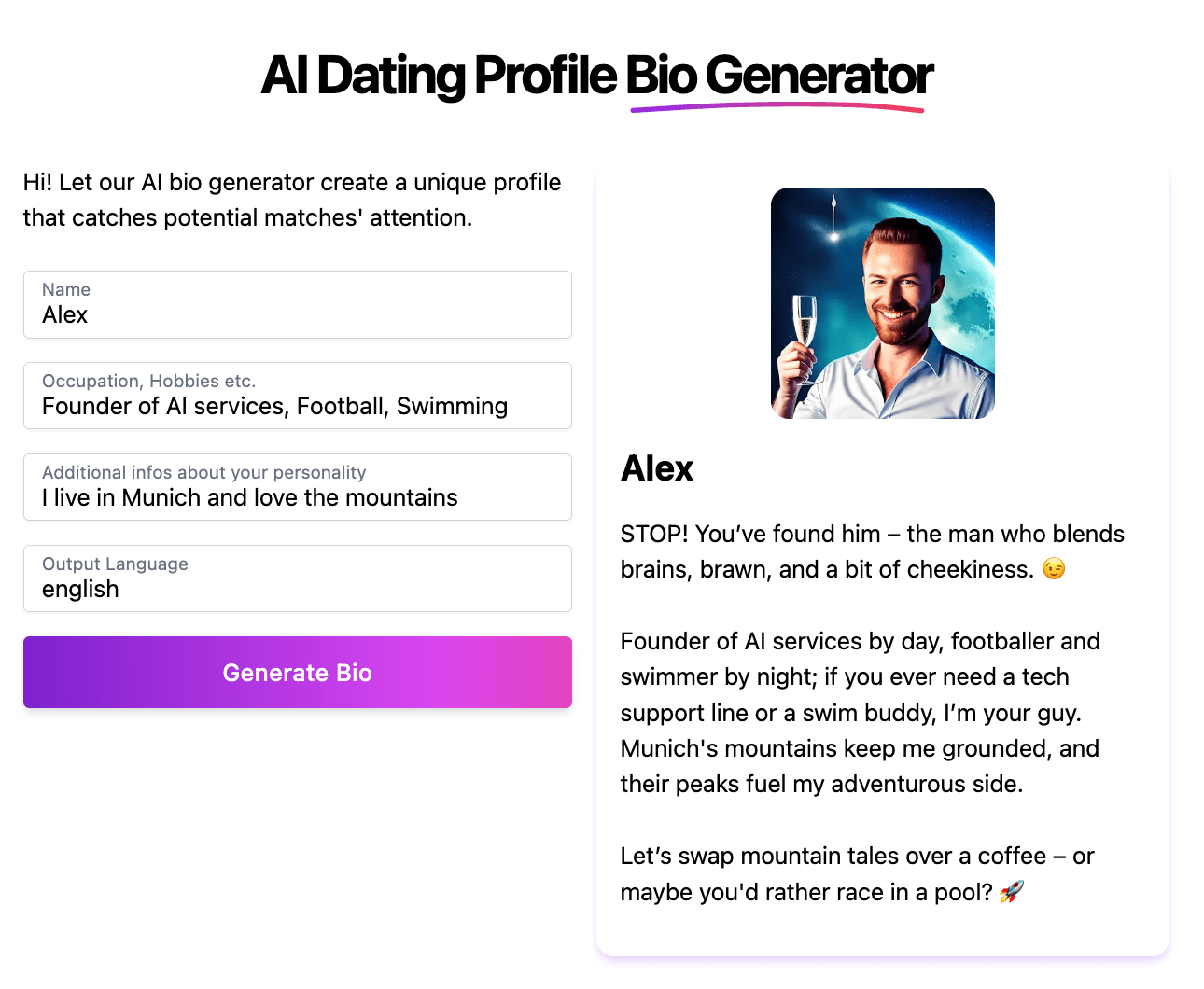
TinderProfile.ai's AI bio generator is a powerful ally in crafting compelling prompt responses. It can help you:
- Generate unique, personality-filled answers that stand out
- Tailor your responses to appeal to your target audience
- Ensure your prompts are optimized for engagement
Remember, while AI can provide a great starting point, always add your personal touch to keep things authentic!
Picture Perfect: Choosing Photos That Pop
Your photos are prime real estate on your Hinge profile. Here's how to make them algorithm (and human) friendly:
- Lead with Your Best: Your first photo is crucial. Make it a clear, friendly headshot.
- Show Range: Include full-body shots, activity pics, and photos with friends.
- Keep it Recent: The algorithm favors profiles with up-to-date photos.
- Quality Matters: High-resolution, well-lit photos perform better.
Treat the claimed 30% lift from mixing close-ups and full-body shots as unverified. Use the format as practical guidance rather than a guaranteed percentage.
If photos are your bottleneck, an AI dating-photo service can help you create natural-looking options from your existing images. Dive deeper into selecting the best pictures for Hinge with our dedicated guide.
By optimizing your profile, you're not just making yourself more attractive to potential matches - you're also signaling to the Hinge algorithm that you're a high-quality, engaged user worth showing to others.
Troubleshooting: How to Fix the Hinge Algorithm When It's Broken
Even with a strong profile, you can run into issues. Here's how to troubleshoot common problems without assuming Hinge has a hidden penalty system.
It's Probably Your Photos.


Average users see 8x more right swipes with our AI photos. Stop wasting time on dating apps and join 60,000+ singles who have already found better dates with TinderProfile.ai.
Why Did My Hinge Matches Suddenly Stop? Understanding the 'Shadowban'
A Hinge shadowban is not an official Hinge term, and a drop in likes has many possible explanations. Hinge does not publish a diagnostic or confirm that reports or fast swiping trigger a hidden penalty. Before deleting anything, review your profile and app settings, then check Hinge support. For broader context, see our guide on the Hinge Shadowban.
Why You're Getting Low-Quality Matches
If your feed is full of profiles you're not interested in, review your stated preferences, dealbreakers, and recent interactions. Hinge does not publish a guaranteed behavioral reset, so do not assume that a week of selective likes will retrain a hidden score. Make changes you can explain and give the profile time to reflect them.
Advanced Hack: The 'X-Out Standouts' Strategy
There is no documented "X-out" hack that recalibrates a hidden score. If Standouts feel off, pass on profiles you are not interested in, update your preferences, and keep your interactions consistent rather than trying to force a particular algorithm response.
How to Reset the Hinge Algorithm: The Complete Guide
You've tried everything, but you still feel stuck. Hinge does not offer a documented reset button or guarantee that deleting and recreating an account clears recommendation data. Read how to reset your Hinge profile before deleting anything.
If you still choose to start over, understand the trade-offs first:
- Delete Your Account Carefully: Use Hinge's account controls only if you are ready to lose your matches, conversations, and history. Uninstalling the app is not the same as deleting an account.
- Do Not Rely on a Purge Window: Hinge does not publish a 24-hour or 72-hour data-clearing guarantee, so waiting a specific number of hours is not a documented reset method.
- Start Fresh Only If It Makes Sense: If you create a new account, use accurate current information and follow Hinge's rules. A new profile is not guaranteed to receive a boost or avoid historical links.
Pros and Cons of a Hinge Reset
A reset is a major account decision, not a proven algorithm hack. Weigh the practical costs before you proceed.
Pros:
- You get a clean profile setup where you can apply what you have learned.
- You can replace outdated photos and prompts in one deliberate update.
- You may decide that starting over is simpler than troubleshooting an old profile.
Cons:
- Hinge does not promise that a reset clears recommendation history or avoids account review.
- You lose existing matches, conversations, and history.
- It requires the effort of sourcing new photos and writing new prompts.
Final Thoughts on Beating the Hinge Algorithm
We've covered what Hinge publicly confirms, what remains unknown, and the profile choices you can make today. Now put that into practice and see which changes make your conversations better.
Key Takeaways
- Think Like the Algorithm: The system rewards quality, engagement, and selectivity. Your actions teach it what to show you.
- Optimize Your Profile: A complete, high-quality profile with great photos and thoughtful prompts is the price of entry.
- Interact Strategically: Every like, comment, and conversation is a data point. Make them count.
- Leverage AI Tools: Services like TinderProfile.ai can give you a significant edge in creating an attractive, algorithm-friendly profile.
- Troubleshoot Smart: Check your profile, photos, and settings first. Hinge does not confirm a hidden penalty system.
- Use Resets as a Last Resort: A reset removes your matches, conversations, and history, and Hinge does not promise that it clears recommendation data.
Success on Hinge isn't about cracking a code. It's about presenting your best self and engaging strategically to make the system work for you.
The Hinge algorithm is a tool designed to help you find meaningful connections. By understanding how it works and aligning your behavior with its goals, you're setting yourself up for dating success. So go forth, apply these insights, and may your journey on Hinge lead you to the connections you seek!
For more tips on optimizing your dating profile on Hinge, check out our guide on Hinge conversation starters.
Happy dating, and may the Hinge algorithm be ever in your favor!
Hinge Algorithm FAQs
Does Hinge have an algorithm?
Yes. Hinge uses a machine-learning recommendation system to personalize profiles and discovery, but it does not publish the full model or its ranking weights. Match Group reported that Hinge's AI-powered Core Discovery Algorithm drove a 15% increase in matches and contact exchanges after launch. That result describes a product-level outcome, not a guaranteed lift for every profile.
How does the Hinge algorithm work?
Hinge uses profile information and in-app behavior to recommend people, then a match happens when two members like each other. You can express interest with a like or comment, as Hinge explains in its official matching guide. Private We Met feedback can also improve future recommendations, including after negative feedback.
Does Hinge use an Elo score or attractiveness tier?
Hinge has not publicly documented a complete Elo score, attractiveness tier, or exact ranking equation. An academic review of dating-app algorithms describes multi-signal personalization on apps such as Hinge but does not establish those production mechanics. Treat Elo or tier explanations as hypotheses unless Hinge publishes technical details.
Does Hinge penalize you for swiping too much?
Hinge does not publish evidence that a specific swipe volume lowers a hidden score or triggers a shadowban. Like profiles you genuinely want to meet, because that keeps your time and conversations focused, not because a documented tier system rewards a target ratio. If activity drops, review your profile and settings before assuming a penalty.
How does Most Compatible work?
Most Compatible is a Hinge recommendation, but Hinge does not publish its full signals, score, or reciprocity rule. Its help center says it tries to send one recommendation per day and that each suggestion expires after 24 hours. Do not assume that the same person sees you as their Most Compatible match. Roses are separate: Hinge's official rules say they appear at the top of Likes You.
Can you reset the Hinge algorithm?
Hinge does not offer a documented reset button or guarantee that deleting and recreating an account clears recommendation data. Deleting an account also removes matches, conversations, and history, and Hinge does not publish a 24-hour or 72-hour purge window. Review the reset guidance in this article and check your account options before taking that step.