


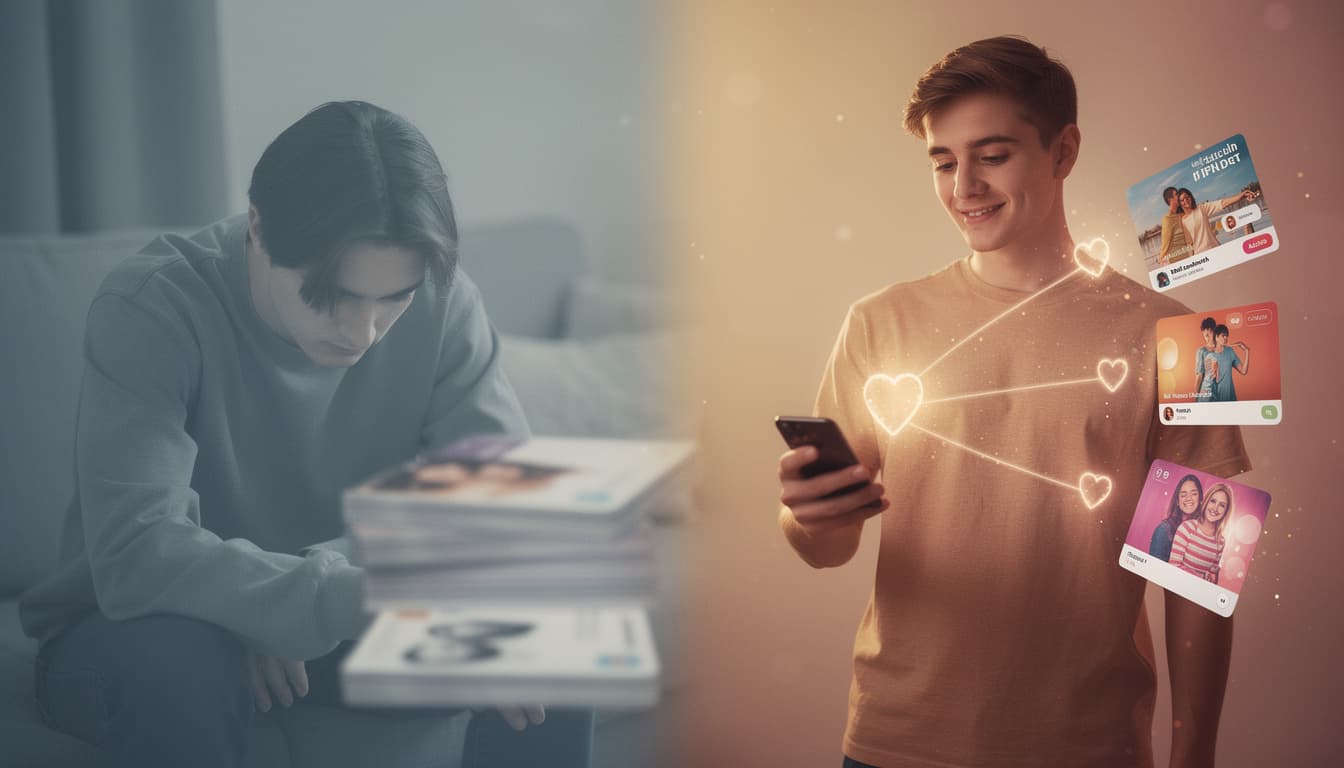
Feeling the sting of dating app rejection is brutal. You spend 30 minutes crafting the perfect first message, wait for a reply, and get nothing but silence. It's not just rejection; it feels like you're completely invisible.
This is a demoralizing experience that countless men face on Tinder, Hinge, and Bumble. The constant swiping, the hopeful messages sent into the void, the matches that vanish without a word. It chips away at your confidence.
But what if I told you that rejection on dating apps is rarely personal? It's not about your worth as a person.
It's a problem of marketing.
This article will break down the psychology of online rejection, give you a powerful framework for building resilience, and offer a concrete strategy to fix the root cause. You'll learn to stop feeling invisible and start getting the results you deserve.
Why Dating App Rejection Hurts So Much (The Psychology You Need to Understand)
If you've ever felt a genuine pang of hurt from being ignored on a dating app, you're not overreacting. Our brains are wired to experience social rejection as a real threat, and dating apps can feel like a minefield of it. Understanding the "why" is the first step to becoming immune to it.
The Effort-to-Reward Imbalance
Think about the effort you put in. You hunt for decent photos, agonize over a bio, and spend hours swiping. You invest time and emotional energy into every match and every message.
When that effort is met with silence, it creates a painful imbalance. This negative feedback loop can lead to serious dating app burnout, making you want to delete the apps altogether.
Gamification and Dopamine
Dating apps are designed like video games. A match gives you a hit of dopamine, the brain's reward chemical. It feels like winning. A notification on your phone triggers a spike of anticipation.
Consequently, no matches or no replies feel like losing. This gamified structure links your swiping activity directly to your self-esteem, making every instance of rejection feel like a personal failure in the game of dating.
Ambiguity and Getting Ghosted on Hinge
What's worse than a "no"?
Nothing.
Getting ghosted on Hinge or unmatched on Bumble is uniquely painful because it offers no closure. Your brain is left to fill in the blanks, and it almost always does so with the harshest possible self-criticism. "Was it something I said?" "Is it my photo?" This ambiguity is often more damaging than a direct rejection. Learning how to respond to ghosting is less about winning them back and more about preserving your own sanity.
Ghosting isn’t a reflection of you; it’s a reflection of their inability to communicate. Your brain, however, will try to convince you otherwise.
It’s a Numbers Game, But It Feels Personal
The reality of most dating apps is a skewed user ratio, with significantly more men than women. This means the competition is immense. A woman might see hundreds of profiles in a single day.
From a purely statistical standpoint, "rejection" (a left swipe) is the norm. Even for the most attractive men, the vast majority of their potential viewers will swipe left. Yet, because your face and profile are attached, each of those statistical events feels intensely personal.
The Rejection Mindset Shift: From Personal Failure to Data Point
The single most powerful thing you can do to handle dating app rejection is to change the way you think about it. You need to stop seeing it as a verdict on your worth and start seeing it for what it is: feedback.
Here’s how to make that critical mental shift.
Look your best on every dating app. In 10 minutes our AI generates realistic and high-performing dating photos designed to get more likes and dates.
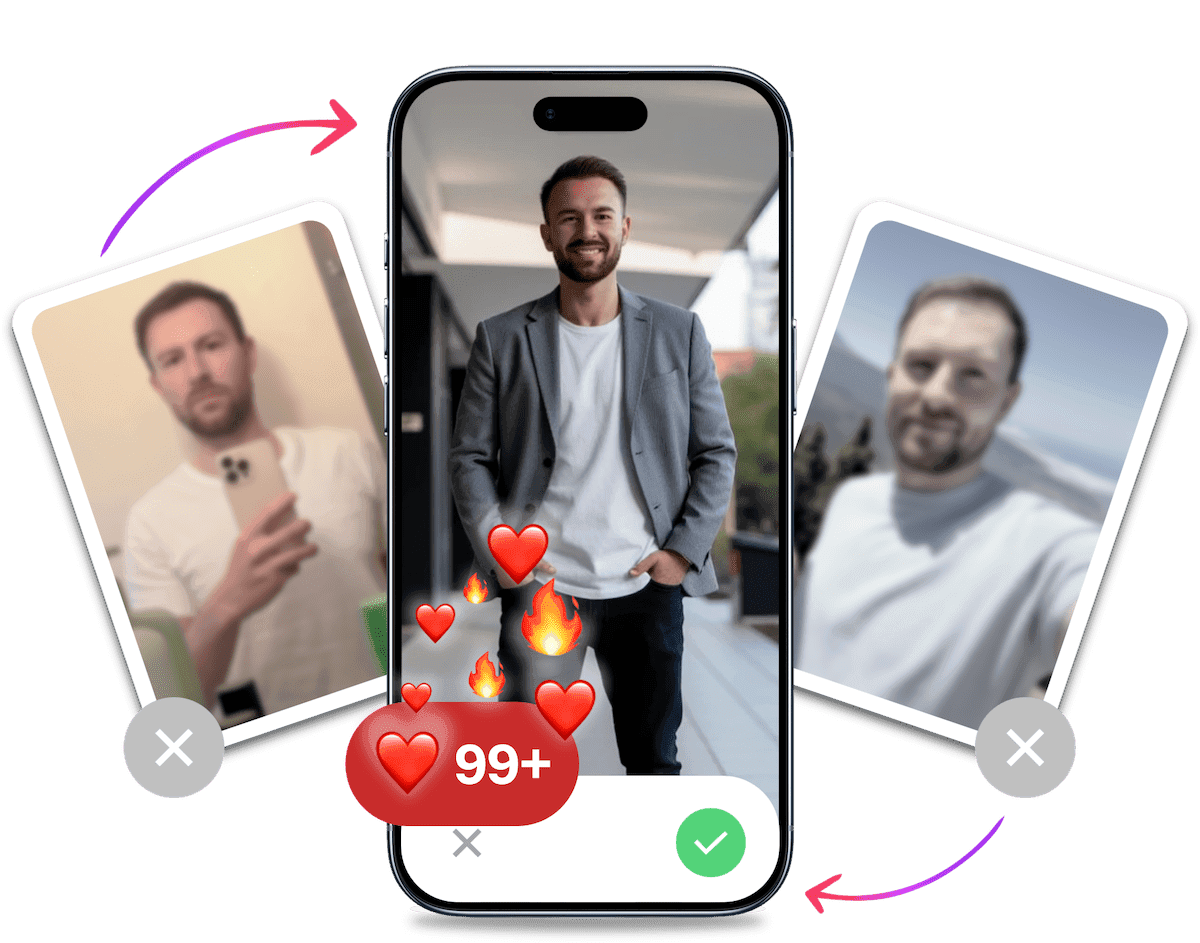
- Get a profile you're proud of
- Drastically increase your matches
- Turn great matches into more dates
Step 1: Depersonalize the "No"
A left swipe is a split-second judgment made on a handful of pixels. It is not a judgment on your character, your sense of humor, your career, your loyalty, or your value as a human being.
She doesn’t know you. All she saw was a picture and maybe a few lines of text. The rejection is of the advertisement, not the product.
Step 2: Embrace an Abundance Mentality
There are literally millions of people on these apps. One person swiping left, one person unmatching, one person not replying. It is a completely insignificant event in the grand scheme of things.
Your goal is not to be liked by everyone. That's impossible.
Your goal is to find the few people you genuinely connect with. Every "no" you receive simply gets you closer to the "yes" that actually matters.
Step 3: Reframe Rejection as Feedback
This is the core of the entire strategy. Every single piece of "rejection" is a data point. It's not a failure; it's market research.
- No matches on Tinder? Your data suggests your primary photos or bio aren't compelling enough to earn a right swipe.
- Matches but no replies? Your data suggests your opening messages aren't engaging.
- Conversations that die out? Your data suggests your texting game needs improvement.
When you see it this way, rejection loses its emotional sting. It becomes a diagnostic tool that tells you exactly where you need to improve dating profile performance. You're no longer a victim of rejection; you're an analyst optimizing a campaign.
Actionable Tip: The "Optimization Log"
Try this simple exercise for one week. Get a notebook or open a notes app on your phone. Instead of feeling bad about a lack of results, become a detective.
For every day you use the apps, write down one potential weakness you observe. Examples:
- "My first photo is a selfie with bad lighting."
- "My bio is just a list of my hobbies."
- "I sent 'hey' to five matches and got zero replies."
This simple act turns passive frustration into an active process of improvement. You're now in control.
The Root Cause Analysis: Fixing the 3 Main Sources of Rejection
Once you've shifted your mindset, it's time for action. Rejection data points to a problem, and most problems fall into one of three categories. Let's fix them.
Source #1: Your Photos Are Your Entire Resume (And Yours Isn't Working)
This is the big one. Let's be brutally honest: your photos are 90% of the reason you face dating app rejection. Before she reads your bio or thinks about a witty opener, she sees your picture. In about two seconds, she decides.
Most men suffer from common photo mistakes that lead to an instant left swipe. These are some of the most frequent dating profile mistakes men make.
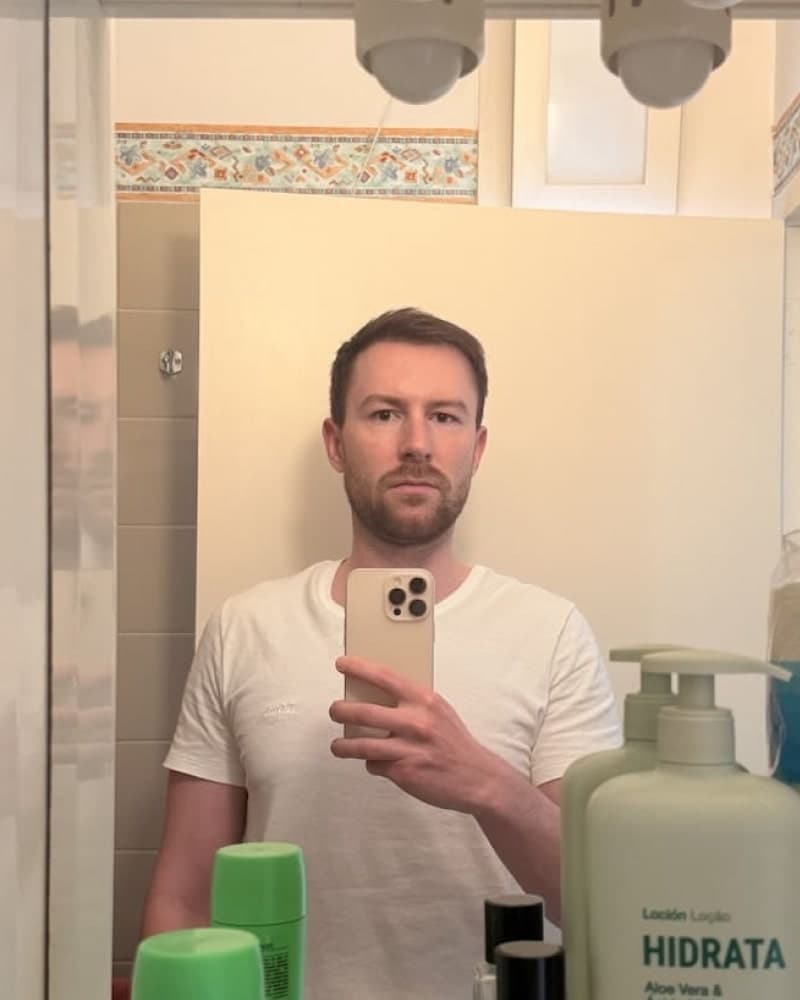
- Blurry Selfies: Especially bathroom selfies. They scream low-effort and lack of social proof.
- Sunglasses in Every Shot: The eyes are critical for building trust. Hiding them makes you seem guarded or untrustworthy.
- Too Many Group Shots: She isn't going to play "Where's Waldo?" to figure out which one is you. Your first photo must be a clear shot of you, and you alone.
- Bad Lighting: Harsh overhead lighting or dark, grainy photos are an instant turn-off.
- Outdated Pictures: Using photos from 5 years and 20 pounds ago is deceptive and will only lead to a bad first date.
- No Variety: Six photos of you sitting on the same couch shows a boring lifestyle.
The dating profile picture psychology is simple: Your photos must quickly communicate that you are attractive, confident, and have an interesting life.
The Modern Solution to an Age-Old Problem
Most guys know their photos are a problem, but the solutions seem difficult. Professional photoshoots are awkward, expensive, and can look overly staged. Asking friends to take pictures for your dating profile feels weird and they're rarely good at it.
This is exactly why specialized tools were created to solve this specific issue.
Services like TinderProfile.ai use AI specifically trained on what works for dating apps. By analyzing your best features from a few casual uploads, it generates over 100 high-quality, authentic-looking AI dating photos. It shows you at your absolute best in different styles, settings, and scenarios.
It’s not about creating a fake person. It’s about presenting the most confident and attractive version of the real you, solving the biggest source of rejection instantly.
It's Probably Your Photos.

Average users see 8x more right swipes with our AI photos. Stop wasting time on dating apps and join 50,000+ singles who have already found better dates with TinderProfile.ai.
Source #2: Your Bio and Prompts Are a Missed Opportunity
If your photos get her to pause, your bio and prompts are what make her swipe right. A generic, negative, or try-hard bio can sabotage even the best pictures.
A great bio has three jobs: show personality, spark curiosity, and give her something to message you about.
Let's look at a common comparison:
| Bad Bio (Leads to Rejection) | Good Bio (Gets Matches) |
|---|---|
| "6'1", since that matters. Engineer. I like hiking, traveling, and good food. Just ask." | "Currently debating whether pineapple on pizza is a crime or a delicacy. Need a lawyer for my case. Other interests include pretending I know how to navigate on hikes and trying every taco spot in the city." |
| "No drama. Looking for someone honest and loyal." | "Pros: Can reach things on the top shelf. Cons: Will probably use that power to hide the good snacks there." |
The bad examples are generic, negative, or demanding. The good examples are funny, engaging, and include a built-in conversation starter. For more inspiration, check out some examples of the Best Tinder Bio For Guys to see what works.
Source #3: Your Opening Message is Generic
You got the match! But the work isn't over. Your opening message is the final hurdle. Sending "Hey," "Hi," or "How are you?" is the digital equivalent of making zero effort.
She has a dozen other matches saying the exact same thing. It's boring and puts all the pressure on her to start an interesting conversation. It's a common reason for getting unmatched or ignored.
A good opener references something specific in her profile. It shows you actually looked and aren't just mass-messaging.
- If she has a travel photo: "The picture from Italy is amazing! Did you prefer Rome or Florence? I'm trying to plan a trip."
- If her bio mentions dogs: "Your golden retriever is majestic. My beagle would be instantly jealous. What's his name?"
- If she has a funny prompt answer: "I'm also convinced that cilantro tastes like soap. We have to stick together. What's another controversial food opinion you have?"
These openers are personalized, easy to respond to, and immediately start a real conversation. They are among the Best Tinder openers you can use.
Building Unshakeable Resilience: A 30-Day Action Plan
Knowledge is useless without action. Use this 30-day plan to put everything together, build momentum, and completely change your experience with dating apps.
Week 1: The Audit & Overhaul
This week is not about swiping. It's about rebuilding your foundation. Your only goal is to implement the fixes from the previous section. Go through your profile with a critical eye. This is the perfect time to get a new set of photos with a service like TinderProfile.ai and completely rewrite your bio and prompts. Follow a guide on how to make a good tinder profile from top to bottom. 2. ### Week 2: The Testing Phase With your new and improved profile, get back online. But this time, swipe with intent, not desperation. Don't swipe on everyone. Focus on profiles you're genuinely interested in. Your mission is to send 5 high-quality, personalized opening messages every day. Track your response rate. It will be higher. 3. ### Week 3: The Mindful Check-in You'll still face some rejection. It's part of the process. But notice how it feels different. With a profile you're confident in, a left swipe feels less like a personal blow and more like a simple mismatch. The goal this week is to appreciate the progress, not demand perfection. Are you getting more matches? Are conversations better? Acknowledge the improvement. 4. ### Week 4: Expand and Iterate Now you have a baseline. If your results have improved dramatically, great! Keep doing what you're doing. If they've only improved slightly, it's time to iterate. Tweak one variable at a time. Change your first photo. Rewrite one of your Hinge prompts. Send a different style of opener. This is the A/B testing that turns dating apps from a source of frustration into a solvable puzzle.
Stop Letting Rejection Define You
Dating app rejection is an inevitable part of the process, but it does not have to destroy your confidence or define your experience. It's a universal frustration, but you now have the tools to rise above it.
Remember the mindset shift. It's not a personal failure; it's a data point. That data is telling you there's a marketing problem with your profile, and marketing problems have solutions.
You don't have to feel invisible anymore.
Stop letting a bad profile dictate your dating life. The fastest and most effective way to eliminate the number one cause of rejection is to upgrade your photos. Check out TinderProfile.ai to see how easily you can get a portfolio of authentic, high-performing dating photos in just a few minutes.
Frequently Asked Questions About Dating App Rejection
Why do I get no likes on Bumble or Tinder?
The most common reason for getting no matches on Tinder or likes on Bumble is your photos. Poor quality, unflattering angles, group shots, or blurry selfies are the primary culprits. Your main profile picture has less than two seconds to make a good impression. If it doesn't, users will swipe left before ever reading your bio.
Is it normal to get ghosted on Hinge?
Yes, unfortunately, getting ghosted on Hinge and other apps is extremely common. It often has nothing to do with you. People get busy, meet someone else, or simply have poor communication skills. While frustrating, it's a normal part of the modern dating landscape that you shouldn't take personally.
How do I stop taking dating app rejection personally?
The key is to reframe it. Understand that a swipe is a reaction to a few photos and words, not to you as a person. Adopt an abundance mentality, knowing there are millions of users. Most importantly, view every rejection as data telling you what part of your "marketing" (your profile) needs to be optimized.
Can better photos really solve dating app rejection?
While they can't eliminate rejection entirely, high-quality photos are the single biggest lever you can pull to drastically reduce it. Photos are the first and most important filter in online dating. Upgrading from mediocre pictures to great ones can dramatically increase your match rate, giving you more opportunities to connect with people and making rejection far less frequent.