


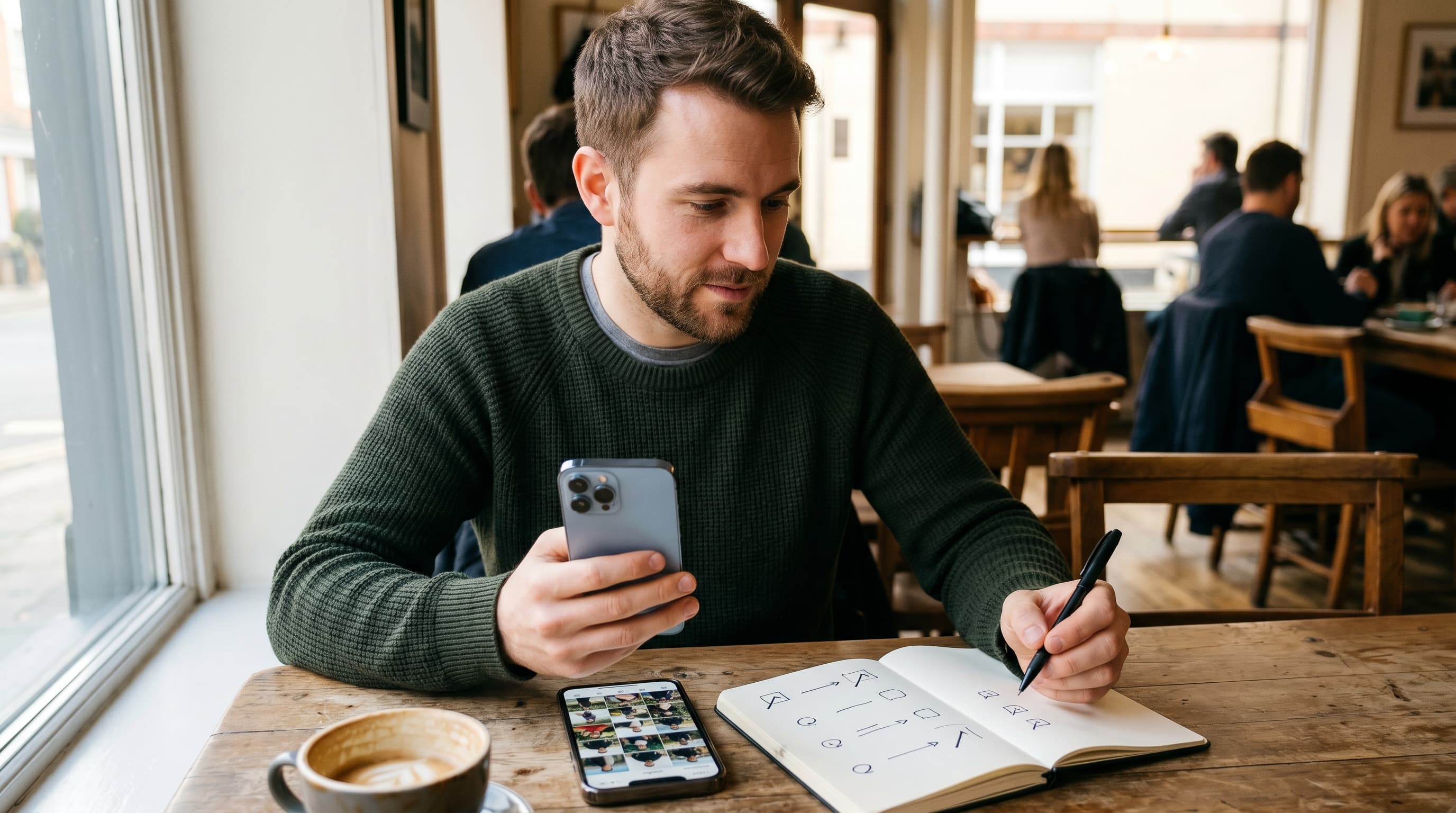
If you want to fix your dating profile, start with the visuals before prompts or premium. Bumble reports that accounts with 6 photos are nearly 2x as likely to get likes as accounts with 3, and it recommends using 4-6 photos overall (Bumble Support, "Here is what Bumble data says about adding photos", 2026; Bumble Support, "Uploading profile photos and videos", 2026).
That gives you the repair order. Swap the opener first. Then strengthen the line-up, sharpen the text, finish the basics, get outside eyes, and only then ask whether reach is the bottleneck.
Key Takeaways
- Bumble reports 6-photo accounts are nearly 2x as likely to get likes as 3-photo accounts.
- Fix the lead photo and photo mix before rewriting everything.
- Use text to support the photos, not rescue them.
- Buy visibility only after feedback and a complete account.
What should you fix first on a dating profile?
Communication Research followed 48 participants across 831 profile views in 2022 and found that pictures drew attention first (Communication Research, "What People Look at in Multimodal Online Dating Profiles", 2022). So start with the visible signals: your opener, image mix, clarity, and trust.
This is not a roast or a generic "be more confident" speech. It is a fast checklist for men who know something feels off. For the broader diagnosis, start with the full dating profile audit.
Separate conversion from visibility. Conversion means your card gets seen but does not turn into likes or matches. Visibility means filters, activity, location, or app reach may be limiting exposure. Fix conversion first because premium only amplifies what is already there.
Free photo review
Find out what your dating photos are missing
Answer a few questions and upload your photos. Get your profile score, photo-by-photo feedback, and a clear plan for what to improve.
Free results. No signup required.
Step 1: Replace a weak first photo
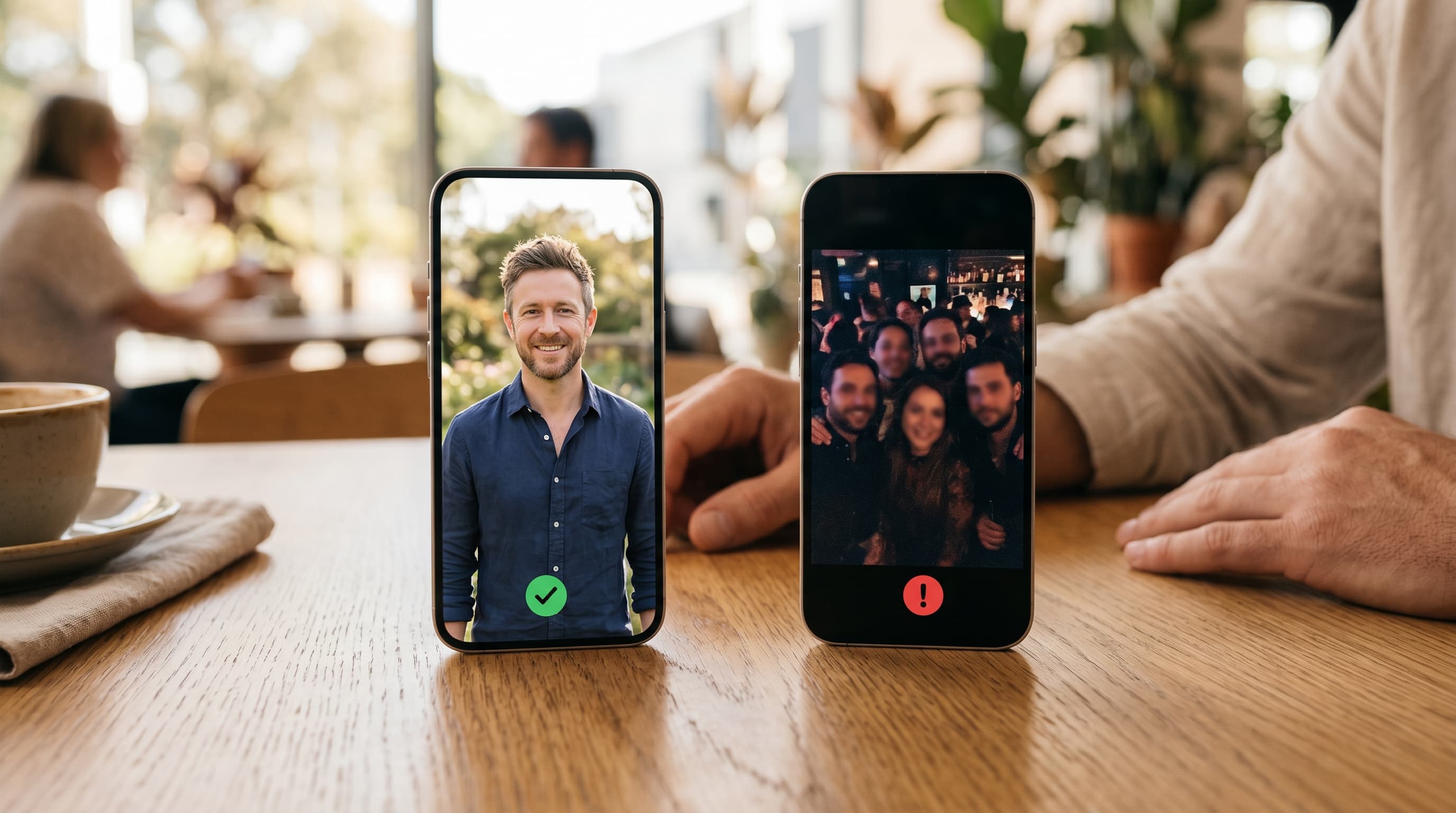
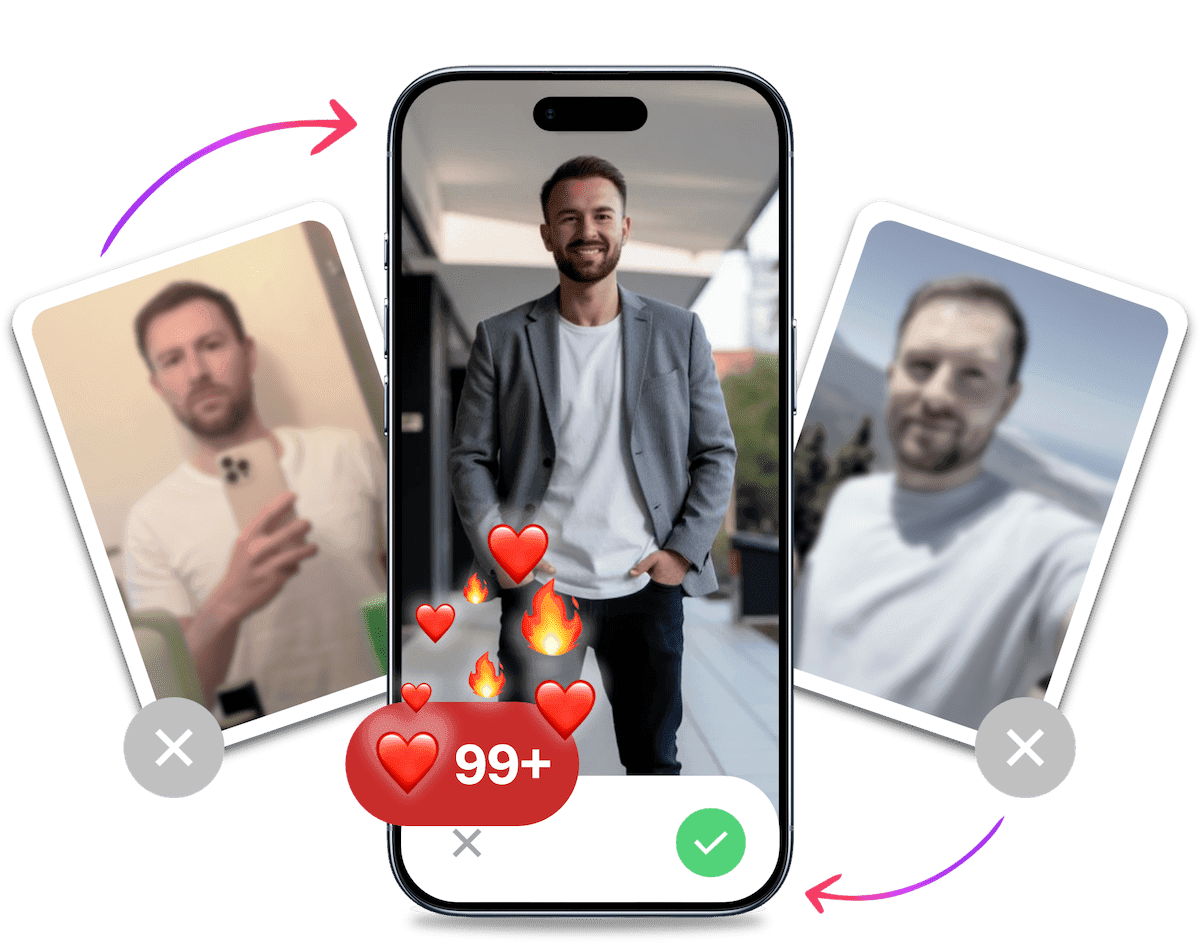
Hinge said in 2025 that its Top Photo feature predicts which shot is most likely to get a Like and moves that shot first (Hinge Help Center, "What is Top Photo?", 2025). So your first repair is simple: lead with a bright solo frame that shows your face immediately.
Your opener is a trust test before it is an attractiveness test. It should make you easy to recognise, place, and swipe on without second-guessing. Weak lead shots usually fail for four reasons: dim light, age, crowding, or overly tight crops.
A cafe portrait in window light beats a cropped bachelor-party shot almost every time. Why? A stranger can read it in a second.
Tinder's Photo Selector points the same way. Tinder notes that the feature reviews factors like lighting and composition and filters out group photos (Tinder Help Center, "Photo Selector", 2026). If someone needs five seconds to work out which face is yours, replace that frame before you touch the bio. For a deeper breakdown of opener styles, use these dating profile pictures.
Step 2: Build a photo stack that shows range
Bumble's 2026 photo note reports that accounts with 6 photos are nearly 2x as likely to get likes as accounts with 3, and it still recommends 4-6 photos overall (Bumble Support, "Here is what Bumble data says about adding photos", 2026; Bumble Support, "Uploading profile photos and videos", 2026). That makes the goal clear: build a stack with range, not six versions of the same mirror shot.
Think in jobs, not favourites. One shot handles recognition. Another shows how you dress on a normal Saturday. Add one action frame, one social moment, and one easy conversation starter. When every picture repeats the same signal, the page feels flatter than your real life.
Hinge points the same way. Its help centre notes that interests, candid shots, sports photos, and smiles tend to receive more Likes than selfies, filters, or sunglasses-heavy visuals (Hinge Help Center, "Why Aren't I Getting Any Matches?", 2026). Trim duplicates before you chase polish. If your current pictures are old, dark, or too similar, use these dating profile photo tips before you start rewriting prompts.
Look your best on every dating app. In 10 minutes our AI generates realistic and high-performing dating photos designed to get more likes and dates.
- Get a profile you're proud of
- Drastically increase your matches
- Turn great matches into more dates
Step 3: Rewrite prompts and bio after the photos work
In 2022, Communication Research tracked 48 participants through 831 profile views and found that users formed impressions from both visuals and text (Communication Research, "What People Look at in Multimodal Online Dating Profiles", 2022). So text matters, but it works best after the visuals already feel clear.
Your prompts should frame the visuals, not apologise for them. Add one specific interest, one easy date clue, and one detail that sounds like a person, not a slogan. "Sunday coffee, used bookshops, and a bad joke" beats "adventurous and fun" because someone can answer it. A vague label cannot.
Hinge advises users with weak results to review both prompts and photos, and Tinder lets you edit your bio, interests, relationship goals, and profile tags (Hinge Help Center, "Why Aren't I Getting Any Matches?", 2026; Tinder Help Center, "Editing your profile", 2026). If you keep slipping into broader copy mistakes, route out to these dating profile mistakes instead of turning this checklist into a bio-template page.
Step 4: Complete the profile fields people use to filter you
Communication Research showed in 2022, across 48 participants and 831 profile views, that impressions were shaped by more than photos alone (Communication Research, "What People Look at in Multimodal Online Dating Profiles", 2022). So missing basics still hurt because blank fields create uncertainty your visuals cannot answer.
Most app users treat these fields like filters. They want to know what you are looking for, roughly how you live, and whether replying makes sense. Tinder's edit flow includes photos, bio, interests, relationship goals, and tags, which is a useful checklist for what most apps expect you to keep current (Tinder Help Center, "Editing your profile", 2026).
Keep this part honest and boring in the best way. A sparse page makes every missing detail feel like a risk, and strangers usually fill that gap with their worst guess. Update the basics, keep them current, and do not invent a better persona. If you want the broader profile-level pass after this section, go back to the full dating profile audit.
Step 5: Get feedback before you buy visibility
Cognitive Research reported in 2017, across two internet-based studies with 610 participants, that other-selected profile photos created more favourable impressions than self-selected ones (Cognitive Research, "Choosing face: The curse of self in profile image selection", 2017). So outside feedback should come before premium because you may be defending the wrong lead shot.
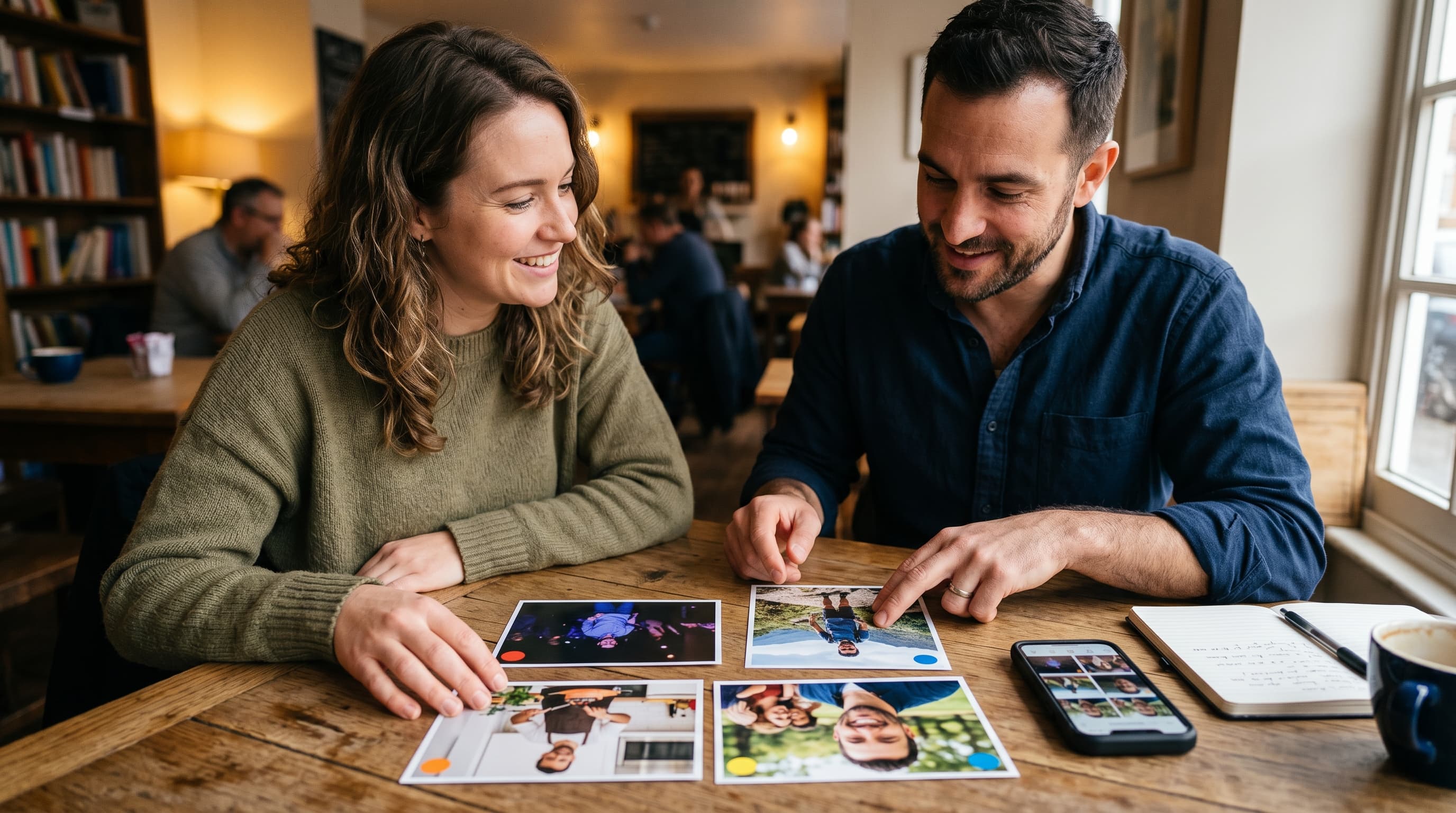
Ask a friend, neutral reviewer, or rating tool three blunt questions: which shot should lead, which should go, and which frame feels least like me? You are not looking for one genius opinion. You want the same hesitation twice.
In our experience, the fight is rarely about every frame. It usually centres on one sentimental photo the owner keeps defending. He remembers the trip or the joke behind it. A stranger only reads the signal. That is why feedback works best when you ask what to cut first, not what to keep.
Outside feedback also keeps you from making a giant swing after one comment. If three people flag the same dim selfie or confusing group shot, remove it and move on. If you want a structured outside read, use photo rating feedback before you spend money on more reach.
Step 6: Is this a visibility problem, not a profile problem?
Communication Research tracked 48 participants across 831 profile views in 2022, a reminder that first impressions matter but cannot explain every weak run on an app (Communication Research, "What People Look at in Multimodal Online Dating Profiles", 2022). If your page is already clear and varied, stop assuming one more tiny edit will solve everything.
Tinder notes that its recommendations are influenced by factors that include activity and recency, not just profile content, and hidden profiles are not shown to other users (Tinder Help Center, "Powering Tinder - The Method Behind Our Matching", 2026; Tinder Help Center, "My profile is hidden", 2026). That means account state matters too. Location, filters, and app behaviour can all narrow your reach.
Premium does not repair conversion. It gives a solid account more chances to work, and a confused one more chances to miss. If your opener is readable, your stack has range, and the basics are filled out, then widen the diagnosis with no matches on dating apps. If not, stay on the page before you pay for extra reach.
Step 7: Use AI photos only if they still look like you
Hinge reported in 2026 that 88% of its daters were uncomfortable with AI-generated profile photos (Hinge, "Hinge's Guide to Using AI in Dating", 2026). So AI can help only when the result still looks recognisable, believable, and close to your real life.
This is the late practical bridge, not the opening answer. If limited variety is the last real gap, TinderProfile.ai can help. It starts at £11, creates dating-specific lifestyle photos in about 10 minutes, and includes a money-back guarantee. Use it to fill believable gaps, not invent a fake version of you.
Keep the realism bar high. A useful AI photo should look like you on a very good day, in a place you could plausibly be. Skip fake penthouses, generic corporate headshots, and anything that swaps your face for a smoother stranger. Trust still decides whether this works.
FAQ
How do I fix my dating profile fast?
Start with visible impact. Bumble reports that accounts with 6 photos are nearly 2x as likely to get likes as accounts with 3 (Bumble Support, "Here is what Bumble data says about adding photos", 2026). Fix the lead shot and line-up first, then prompts and basics.
How many photos should I use on dating apps?
Aim for 4-6 photos. Bumble recommends that range, and its 2026 note reports that accounts with 6 photos are nearly 2x as likely to get likes as accounts with 3 (Bumble Support, "Uploading profile photos and videos", 2026; Bumble Support, "Here is what Bumble data says about adding photos", 2026). More only helps when each shot adds information.
Are selfies bad for dating profiles?
Not automatically, but a selfie-only line-up often reads flat. Hinge notes that selfies tend to receive fewer Likes than interest photos, candid shots, sports photos, and smiling pictures (Hinge Help Center, "Why Aren't I Getting Any Matches?", 2026). Keep one strong selfie at most, then add range.
Should I pay for premium before fixing my profile?
Usually not. Cognitive Research reported in 2017, across two studies with 610 participants, that people chose more favourable profile photos for strangers than for themselves (Cognitive Research, "Choosing face: The curse of self in profile image selection", 2017). Fix conversion first, then decide on extra reach.
Can AI dating photos help fix my profile?
Yes, when the real gap is variety rather than identity. Hinge reported in 2026 that 88% of its daters were uncomfortable with AI-generated profile photos (Hinge, "Hinge's Guide to Using AI in Dating", 2026). Use AI only when the results still look realistic and recognisable.
Most tune-ups are less dramatic than they sound. Start where strangers judge first, then move outward: opener, stack, text, completeness, outside input, and only then visibility. That order keeps you from polishing the wrong layer.
For the broad version, continue with the full dating profile audit. If the page already looks solid but results still feel weak, go deeper on no matches on dating apps. Do not start with a clever quote or a paid boost. Limited variety is the late use case where realistic dating-specific shots can close the gap faster.