


The London dating scene is brutal, and let's be honest, it's not much easier in Manchester or Birmingham. Are you spending hours swiping on dating apps, only to be met with a frustrating lack of results? If you feel like you're shouting into the void, you're not alone. Many blokes feel like they're doing something wrong but can't work out what it is.
The solution isn't to swipe more. It's to swipe smarter. We're going to show you how by A/B testing your dating profile. It's a method for comparing two versions of something to see which one performs better, and it's the secret weapon used by giants like Netflix and Amazon to keep you hooked.
This guide provides a step-by-step framework to stop guessing. You will learn how to use data to systematically improve your match rate on UK dating apps like Tinder, Hinge, and Bumble.
And the single biggest lever you can pull? Your photos. We will show you exactly how to test them for maximum impact in 2026.
What is A/B Testing and Why Does It Work for Dating Apps?
Let's break down A/B testing, also known as split testing. It sounds technical, but the concept is simple.
Imagine you're marketing a new movie. You create two different posters. You show Poster A to one group and Poster B to another. Whichever poster convinces more people to buy a ticket is the winner. You're doing the exact same thing, but the product is you, and the "ticket" is a right swipe.
This approach gives you a massive advantage in the world of online dating, where small changes can lead to huge differences in your results.
The Problem with the "Set It and Forget It" Profile
Here's what most blokes do: they upload a few random photos from their camera roll, scribble a quick bio, and then hope for the best. They might tweak a word here or there, but the profile essentially becomes static. A digital fossil.
When the matches don't roll in, they get frustrated and blame the app or assume something is wrong with them. The real problem is the approach. Without testing, you have no idea what's actually working or, more importantly, what isn't. You're flying blind when you could be using a GPS.
The Scientific Advantage: Isolate, Test, Iterate
The core principle of A/B testing is beautifully simple: change only one variable at a time. This is critical. If you change your main photo AND your bio simultaneously, you won't know which change caused the increase (or decrease) in matches.
By isolating a single variable—your first photo, your second photo, a specific Hinge prompt—you can know with certainty what caused the change.
Your key metric for success is simple: the number of new likes or matches received over a set period. A 7-day window is usually a great starting point. This gives you a clear, data-backed winner for every test you run and is one of the best dating profile tips you'll ever get.
The Mathematics of Attraction: Sample Sizes & Statistical Significance
Before we dive into photos, we need to address the science. If you want to optimise your profile like a pro, you have to think like a data scientist.
Counting matches is good, but understanding conversion rate is better. This is the percentage of people who see your profile and decide to swipe right. While apps don't give you this exact number, you can estimate it by tracking matches per 100 swipes you perform (assuming a reciprocal algorithm).
Sample size matters. A test that runs for 24 hours is meaningless. Why? Because user activity varies wildly throughout the week.
- The "Sunday Spike": Dating apps in the UK see a massive surge in activity on Sunday evenings.
- The "Tuesday Slump": Activity often drops mid-week.
If you test Photo A on a Tuesday and Photo B on a Sunday, Photo B will win simply because more people saw it. To achieve statistical significance, you must run your tests for full weekly cycles to smooth out these anomalies. This ensures that when you see a lift in matches, it is because of your profile changes, not just because it was raining in London and everyone stayed inside to swipe.

The Ultimate A/B Test: How to A/B Test Your Dating Profile Photos
Let's get straight to the point. Research suggests that your dating app photos are responsible for up to 90% of a person's decision to swipe right.
That is an absolutely massive number.
This means that your pictures are the highest-impact variable you can possibly test. Optimising your photos isn't just a good idea. It's the entire game. If you want to improve your dating profile, this is where you must start.
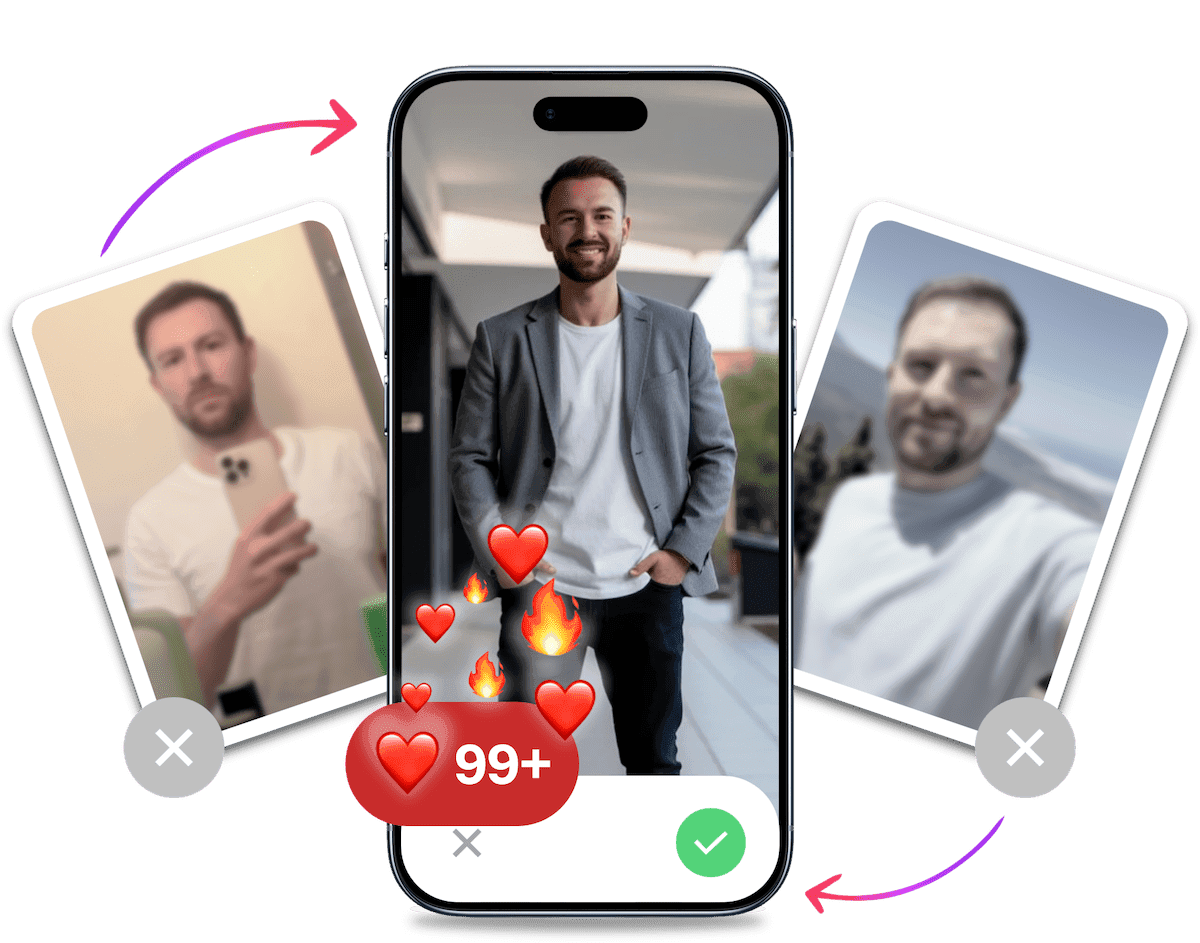
Look your best on every dating app. In 10 minutes our AI generates realistic and high-performing dating photos designed to get more likes and dates.
- Get a profile you're proud of
- Drastically increase your matches
- Turn great matches into more dates
The A/B Photo Testing Bottleneck: Why Most Men Can't Do It Right
So, if testing photos is so important, why doesn't everyone do it? Because of a major bottleneck: you need a supply of good test subjects.
To run a proper A/B test on your pictures, you need multiple, high-quality photos that are stylistically different from one another. This is where most blokes hit a wall. Let's look at the old, broken solutions.
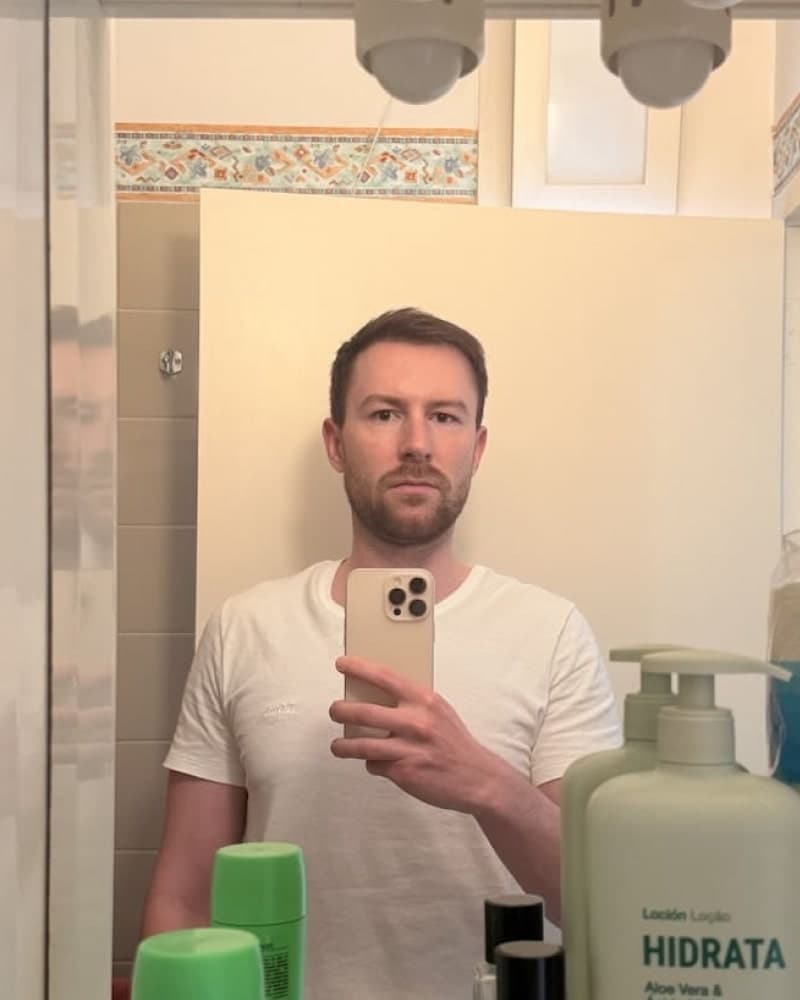
- Using your existing photos: Your camera roll is probably a graveyard of similar-looking selfies, blurry group shots, or photos that are five years out of date. You simply don't have enough diverse, quality options to run a meaningful test.
- Hiring a photographer: A professional dating photo shoot can cost £400 or more. Worse, the photos often look incredibly staged, try-hard, and inauthentic. It's not a practical way to generate a dozen different styles to see what truly resonates.
You can't test what you don't have. Testing two bad photos against each other only tells you which one is slightly less bad. That's not a winning strategy.
The Solution: Generating Your Photo "Testing Portfolio" with AI
This is where everything changes. Instead of struggling to find usable photos, what if you could generate an entire portfolio of testable, high-quality images in minutes?
That's exactly what we built at TinderProfile.ai.
Instead of one expensive photo shoot, our AI generates 100+ photos in dozens of different styles, giving you a complete portfolio of high-quality 'test subjects.' You get candid shots, professional shots, adventurous shots, and more—all with your face, all hyper-realistic.
We're not a generic headshot tool for LinkedIn. Our AI is built exclusively for dating. It understands what creates attraction and authenticity on apps like Tinder and Hinge. We deliver realistic AI dating photos that look like they were taken by a friend on a great day. It's you, just at your absolute best.
You get a massive arsenal of A/B testing ammunition without the awkwardness or expense of a photo shoot.
Generate Your Photo Test Portfolio Now
Pre-Testing vs. Live Testing: Accelerating Your Results
Live testing on Tinder takes time—usually a week per photo. If you have 10 new photos to test, that is two months of testing. To speed this up, you can use "Pre-Testing" tools.
Platforms like Photofeeler allow you to get anonymous feedback on your photos before they ever go live on your dating profile. This helps you filter out the obvious losers immediately.
However, be careful. The people rating you on these sites are often looking at technical quality (lighting, composition) rather than dating potential. They might rate a professional headshot highly, while a candid shot of you at a pub festival performs better with actual dates. Use pre-testing to shortlist your top 5, then use live A/B testing on the apps to find the true winner.
Step-by-Step Guide: How to Run an A/B Test on Your Tinder/Hinge Photos
Ready to become a dating scientist? Here is the exact, step-by-step process for A/B testing your dating profile pictures. Follow this, and you will get more matches.
- Establish Your Baseline (The "Control"). Before making any changes, you need to know your starting point. Run your current profile exactly as it is for one full week (7 days). At the end of the week, record the total number of new likes or matches you received. This number is your baseline.
- Formulate Your Hypothesis. A hypothesis is just an educated guess. For example: "I believe a photo of me smiling candidly outdoors will get more matches than my current serious, indoor headshot." This defines what you're testing.
- Create Your "Challenger" Profile. Now, it's time to build your test. Keep everything else on your profile exactly the same—your bio, your prompts, your other photos. The only thing you will change is the single variable from your hypothesis. Swap your "control" first photo with your new "challenger" photo (e.g., one of the awesome new ones from your TinderProfile.ai portfolio).
- Run the Test. Let this new "challenger" profile run for the same amount of time as your baseline test—another 7 days. This ensures you're comparing apples to apples, accounting for weekday vs. weekend activity spikes.
- Analyze the Results. At the end of week two, compare the numbers. Did your baseline profile get 15 matches while your challenger profile got 25? If so, you have a clear winner! Your hypothesis was correct. The challenger photo now becomes your new "control" main picture.
- Repeat and Iterate. The process doesn't stop here. Optimisation is a continuous loop. Now, you can test your new winning photo against another style. Or, you can keep your winning first photo and test your second photo. The key is to keep iterating, making small, data-driven improvements over time to constantly optimise your Tinder profile.
Platform-Specific Testing Strategies
Not all apps are created equal. The strategy that wins on Tinder might fail on Hinge. Here is how to tailor your testing for the UK's most popular apps.
Tinder: Mastering "Smart Photos"
Tinder has a built-in A/B testing tool called "Smart Photos." It automatically rotates your photos and shows the most popular one first.
- The Pro: It's effortless automation.
- The Con: It's a black box. It doesn't tell you why a photo works, nor does it let you test variables like your bio.
- The Strategy: Use Smart Photos to determine your top 2 performing images. Once identified, turn the feature off and manually A/B test those two images as your primary photo for a week each to see which one drives more conversations, not just likes.
Hinge: Testing Prompts & British Humour
Hinge is less about the swipe and more about the "scroll and engage." The key metric here isn't just a like, but a comment.
- The Nuance: In the UK, self-deprecation and sarcasm reign supreme. A sincere American-style prompt like "I am passionate about success" might get an eye-roll in London.
- The Test: Test a "Sincere" answer against a "Witty/Sarcastic" answer. For the prompt "My simple pleasure," test "A perfectly brewed coffee" (Sincere) vs. "Judging people who stand on the left side of the escalator" (Witty). See which one gets more replies.
Bumble: Signalling Approachability
Since women make the first move on Bumble, your primary goal is to look approachable, not intimidating.
- The Test: A/B test your main photo for "Approachability" signals. Compare a "cool," stoic photo against one where you are smiling warmly or holding a dog. Often, the "softer" image wins on Bumble because it lowers the barrier for her to send that first message.
Beyond Pictures: How to A/B Test Your Bio, Prompts, and More
While photos are the undisputed champion of dating profile optimisation UK style, the words you use still matter. They can be the difference between someone being intrigued enough to send a message or swiping left after liking your photo.
Testing Your Bio: Short & Punchy vs. Detailed & Descriptive
Your bio is your elevator pitch. But which pitch works best? A short, witty one-liner or a more descriptive paragraph?
Keep your photos constant for this test. Run each bio for a week.
| Test A (Control): Short & Punchy | Test B (Challenger): Detailed & Descriptive |
|---|---|
| "Software engineer. Love hiking and a good pint. My dog is cooler than I am." | "Building tech by day, exploring the Peaks on weekends. Currently on a mission to find the best Sunday Roast in town—recommendations welcome. Looking for someone who doesn't take themselves too seriously." |
Test A is direct. Test B is more engaging and includes a call-to-action ("recommendations welcome"), which is huge in British dating culture for starting chats about local spots. Only testing will tell you what works. For more ideas, check out some of the best Tinder bios for blokes we've analysed.
It's Probably Your Photos.
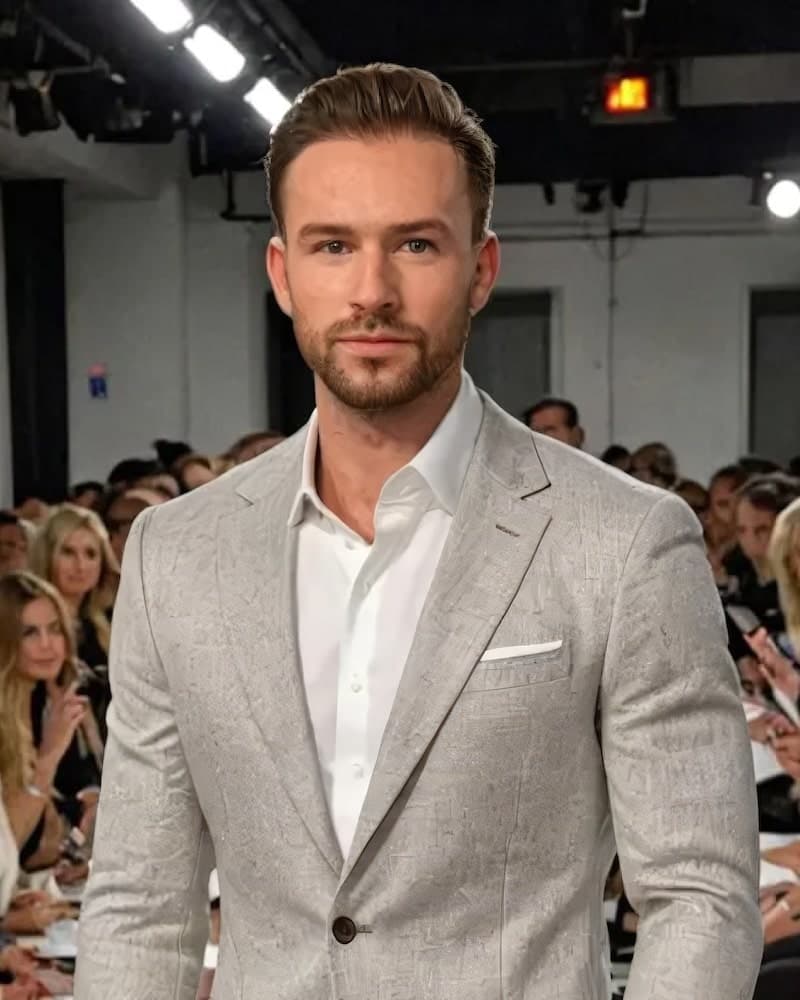
Average users see 8x more right swipes with our AI photos. Stop wasting time on dating apps and join 50,000+ singles who have already found better dates with TinderProfile.ai.
What Other Variables Can You Test?
Once you get the hang of it, you'll see testing opportunities everywhere. Here are a few more ideas to get you started:
- The order of your photos (after you've locked in your best first photo)
- Including a group photo vs. having only solo shots
- Your job title or anthem on Tinder
- The primary "interest tags" you display
- Your "About Me" stats on Hinge (e.g., political views, drinking habits)
Common A/B Testing Mistakes to Avoid
A data-driven approach is powerful, but only if you do it correctly. Many well-intentioned blokes sabotage their own tests by making simple errors. Here are the most common dating profile mistakes to avoid.
- Testing Too Many Variables at Once. This is the cardinal sin of A/B testing. If you change your main photo, your bio, and three prompts all at once, your data is meaningless. You have no idea what caused the result. Rule #1: One change at a time.
- Not Giving the Test Enough Time. Getting impatient after a few hours and calling the test is a huge mistake. Dating app activity fluctuates. You need at least 5-7 days for each version to collect a reliable sample size and smooth out any daily anomalies.
- Ignoring App-Specific Features. Be aware of built-in tools. Tinder's "Smart Photos" feature is useful but limited. For true optimisation, you need to do it manually.
- Using Low-Quality "Challengers." Your test is only as good as the options you're testing. If you test two blurry, low-effort photos against each other, you'll just learn which one is less terrible. To get a real lift in matches, you need to test your current best against a truly high-quality challenger. This is why having a deep portfolio of best Tinder pictures from a service like TinderProfile.ai is a game-changer.
Final Thoughts on A/B Testing Your Dating Profile
Your dating life shouldn't feel like playing the lottery. It doesn't have to be a game of chance where you just cross your fingers and hope for the best.
By applying a simple, data-driven A/B testing framework, you take control back. You transform from a passive participant into an active optimiser of your own success. You stop guessing and start knowing what actually works.
Remember, the single most important element you can possibly test is your photos. They are the gateway to every like, every match, and every conversation.
But you can't A/B test what you don't have. Don't let a lack of good photos hold you back from getting the results you deserve in 2026.
Get your ultimate testing portfolio today.
Create My AI-Powered Photos and Start Testing
FAQs
Here are some quick answers to the most common questions about A/B testing your dating profile.
How do you A/B test a dating profile?
It's a simple, scientific process. First, you establish a baseline by running your current profile for a week and recording the number of matches. Then, you change only one variable, like your main photo or your bio. You run this new version for another week and compare the number of matches to your baseline to find the winner.
How can I A/B test my Tinder photos?
The best method for an A/B test on Tinder profile pictures is to manually swap them while keeping your bio and other elements the same. The biggest challenge is having enough varied pictures to test. For a truly effective test, you need a diverse set of high-quality photos in different styles, which is why AI photo generators like TinderProfile.ai are so powerful for this specific task.
Does A/B testing actually work for dating profiles?
Yes, absolutely. A/B testing works because it replaces guesswork and assumptions with a data-driven approach. Instead of wondering what people like, you can systematically test different elements to find out what resonates most with your target audience. This leads to better dating app profile optimisation and a higher match rate over time.
What metrics should I track?
The primary metric you should always track is the number of new matches or likes you receive over a set period (like 7 days). This is the clearest indicator of your profile's top-of-funnel appeal. Secondary metrics could include the number of conversations started or replies received.
How do I conduct a dating profile audit before testing?
Before you start testing, review your current assets. Check if your photos are clear, if your bio has a hook, and if your prompts invite conversation. This initial audit helps you identify the weakest links—usually blurry photos or generic bios—so you know exactly what to test first.
Are there alternatives to Photofeeler for the UK market?
Yes. While Photofeeler is popular, you can also use AI-driven analysis tools or simply ask honest female friends for feedback. However, the most accurate feedback always comes from live testing on the apps themselves, as this measures real-world attraction rather than just aesthetic opinion.