


If you're trying to find out if someone is on a dating site, public searches generally can't verify current app use. A profile someone shares or one that appears in a feed shows only what was visible at that moment. No result, an old screenshot, a reused photo, or a people-search report proves account control, recent activity, or relationship conduct.
If this is about a relationship, uncertainty can be rough. When it feels safe, ask directly and focus on what you need to know.
What a Dating Profile Search Can Show
| Evidence type | What it can show | What it cannot establish |
|---|---|---|
| A profile someone voluntarily shares | What they chose to show you at that time. | Who controls the account now, whether it is active, or what happened in your relationship. |
| A profile appearing or not appearing in a feed | What appeared, or did not appear, in the feed you saw. | Whether someone is using the app or whether an account exists outside that feed. |
| A photo reused in a suspected romance scam | That an image may appear elsewhere online. | The person's identity, dating-app membership, or current activity. No match proves nothing. |
| A third-party people-search entry | That a broker report lists information associated with a person. | Dating-app membership, account control, or current activity. |
Ethical and Legal Aspects: Navigating Your Search Responsibly
If you are concerned about someone's dating-app use, keep to clear privacy boundaries. Don't access their account or device. If you have a legal question about your situation, consult qualified local guidance. When it feels safe, a direct conversation is the clearest next step.
- Don't test password recovery or use someone else's credentials.
- Don't create a decoy profile or install monitoring software.
- If direct contact could put you at risk, talk with someone you trust before deciding what to do.
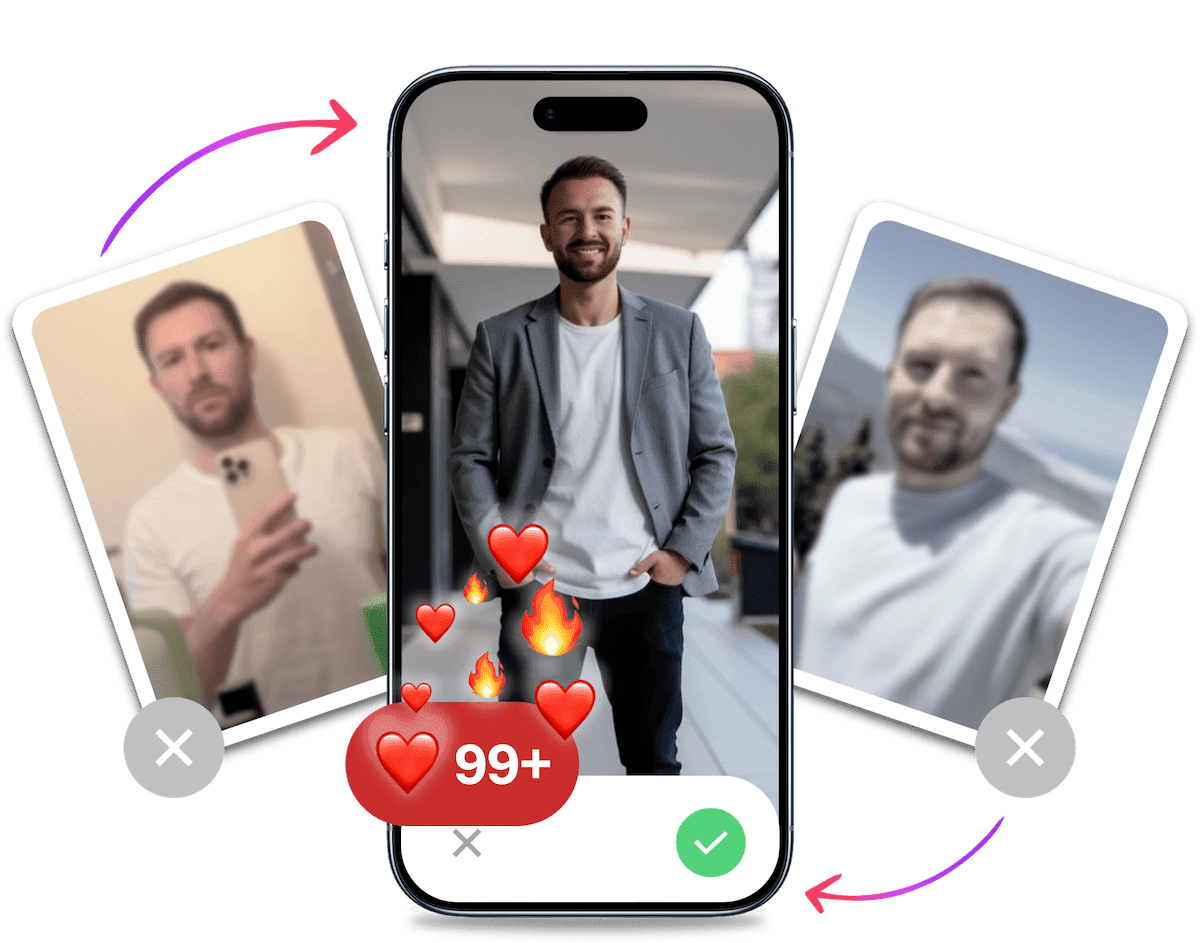
Look your best on every dating app. In 10 minutes our AI creates realistic dating photos designed to get you more likes, better matches and better dates.
- Get a profile you're proud of
- Proven to increase matches on dating apps
- Turn great matches into more dates
A Free Check for Suspected Romance Scams
Reverse Image Search
If someone you met online asks for money or gives you reason to suspect a romance scam, a reverse image search of a photo they sent you may reveal reuse. A match is a warning sign, not proof of identity or dating-app membership. No match proves nothing. See FTC guidance on romance scams.

Platform-Specific Search Strategies
| App | What the app offers |
|---|---|
| Tinder | Tinder Search help describes an iOS interest and lifestyle search test in select markets, not a search for a named person. |
| Hinge | Hinge Discover Feed explains that Hinge does not offer search for specific people. |
| Bumble | Bumble Handle help documents an optional exact-handle feature for eligible verified members in the USA on iOS. They can look up profiles in the same country by exact handle. It is not a name, partial-handle, or location search. |
Seeing a profile in a feed, by itself, doesn't tell you when the account was last active. A missing result doesn't rule out an account.

It's Probably Your Photos.

Photos designed to get you more likes, better matches and better dates. TinderProfile.ai is trusted by 60,000+ users.
What Third-Party People-Search Sites Can Show
People-search sites are data brokers. They compile public records, public social profiles, and information from other brokers. A report may list information associated with a person, but it cannot verify dating-app membership, account control, or current activity. Read the FTC guidance on people-search sites for how these data brokers collect and sell information.

What to Do After Finding a Dating Profile: A Strategic Guide
Discovering a dating profile can raise difficult questions. How you handle the situation matters for your relationship and your own well-being. Reacting impulsively can make things worse, so give yourself time to think.
Step 1: Process Your Emotions Before You React
Finding a profile may trigger anger, hurt, or confusion. Give yourself time to process those feelings before you act.
- Take a Step Back: Avoid an immediate confrontation. A conversation driven by strong emotions is rarely productive.
- Reflect on the Situation: Seeing a profile in a feed doesn't tell you who used the account or what happened in your relationship. When shown, activity labels such as Tinder's Online Now or Hinge's Last Active status give a rough idea of when the account was last active. An old profile may be out of date, and a missing result doesn't rule out an account.
- Talk to a Trusted Friend: Get an outside perspective from someone you trust to help you see the situation clearly.
Step 2: Document Your Findings Objectively
Before you start a conversation, make sure you have your facts straight.
- Keep Relevant Screenshots Private: A screenshot records what appeared on your screen at that time. It doesn't prove who controlled the account or when it was used. If you report impersonation or a suspected scam, share relevant screenshots only through official platform support or reporting channels. For a suspected romance scam, follow FTC guidance on romance scams and see how to spot a fake dating profile.
Step 3: Plan the Conversation Strategically
This is not a regular argument. It's a critical conversation about trust and the future of your relationship.
- Choose the Right Time and Place: Find a private, neutral setting where you won't be interrupted. Don't start this conversation late at night or before a major event.
- Start with "I" Statements: Describe what you saw and how it made you feel, without treating a profile as proof of recent use.
- Ask Directly if It Feels Safe: You could say, "I came across a profile that may be yours, and I'm confused. Can you help me understand what I'm seeing?" A profile alone doesn't confirm who controlled the account or when it was used.
- Know Your Goal: Decide beforehand what you want from this conversation. Is it an explanation? An apology? A breakup? Knowing your desired outcome helps you steer the conversation.
Step 4: Rebuilding or Moving On
After the conversation, decide what you need. You might set boundaries, seek couples counseling, or move on. Those are personal choices. A profile result or someone's reaction alone does not establish recent use or what happened. Spotting online dating red flags early can help you make better decisions in the future.
Trust takes years to build, seconds to break, and forever to repair. The rebuilding process requires commitment from both partners.
How TinderProfile.ai Can Help You Enhance Your Own Dating Profile
If you want to work on your own dating profile, TinderProfile.ai generates dating-profile photos from your existing photos. You upload your own images to start. For help with the rest of your profile, read our guide to how to make a good Tinder profile.
Final Thoughts on Finding Hidden Dating Profiles Ethically and Effectively
A dating-profile search can show only what was visible in a particular result at a particular time. It cannot establish who controls the account, whether the person uses it now, or what happened in a relationship. If it feels safe, ask directly and decide what boundaries you need.
Frequently Asked Questions About Dating-Profile Visibility
How can I find out if my partner is on a dating site for free?
Free checks cannot confirm whether someone is currently using a dating app. A result may show that a profile was publicly visible at one point, while no result may simply mean it was not indexed or shown to you. Don't search private identifiers or use account-recovery features. If you need clarity, ask directly when it feels safe.
What are the best tools for searching dating profiles?
People-search sites can show brokered information drawn from public records, public social profiles, and other brokers. They cannot verify a dating-app account, who controls it, or whether it is active now. The FTC's guidance on people-search sites explains how these data brokers collect and sell information. Treat a listing as information, not proof.
Is it legal to use paid services to find dating profiles?
Whether using a paid people-search service is legal depends on the service, your location, and how you use the information. This article can't determine the law for your situation. Don't access anyone's account or device without permission. For a specific legal question, consult a qualified professional in your area.
How can I protect my privacy while investigating?
Keep any screenshots private and share them only with official platform support if you report impersonation or a suspected scam. Don't send someone else's personal information to a search service or post it publicly. The FTC's romance-scam guidance explains how to report a suspected scam and what to do if you've sent money.
What should I do if I find my partner on a dating site?
If you see a dating profile that may belong to your partner, pause before reacting. A visible profile does not by itself show who controls it or when it was used. If it feels safe, ask a neutral question and hear their response. Then decide what boundaries, counseling, or relationship changes make sense for you.